The 2002 Season Report
Im not sure how the 2002 season could be improved on. There was
a nice mix of family trips and custom trips with groups of fishing friends.
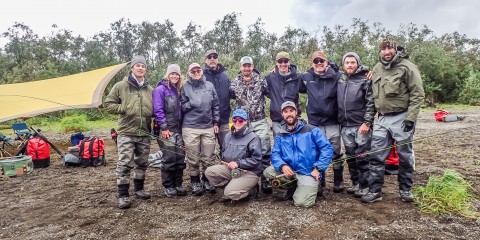
My daughter Kate and my son Alex and I hosted some novices with wonderful
attitudes as well some of the most proficient fly fishers that it has
ever been our fortune to accompany. The youngest fly fisher in 2002 was
ten and several fishermen who were in their sixth decade represented the
"Masters class".
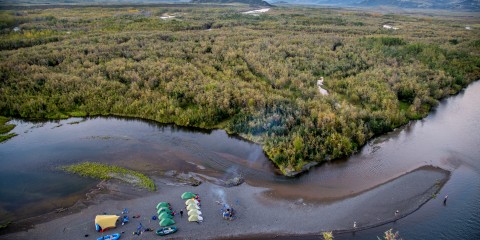
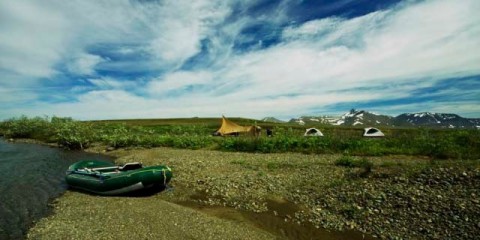
We camped every night in expedition sized North Face mountaineering tents
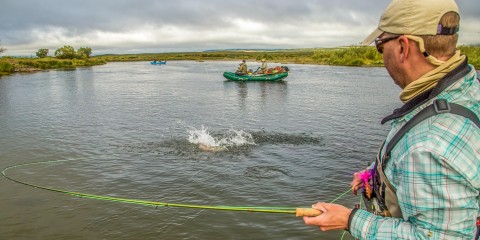
within feet of the rivers we fished & rafted by day. We released all
our fish except what we dined on but we took home incredible memories
of those fish overlaid by scenes of camp camaraderie, and all the sights
& sounds of the 24-hour Alaskan days.
High points:
The most potent "fish per unit time" fly fishers of the year
was a team of brothers- Mark & Tim OBrien, fishing egg patterns
on the King Salmon tributary of the Nushugak. We dont generally
publish a record of the numbers of fish caught but the OBrien brothers
were pushing beyond 100 fish per day. Fishing machines.
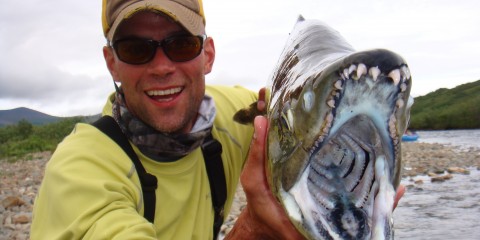
The angler with the biggest smile of the year was Alaska first timer
Steven Manker. Steven hiked overland from camp, one morning, to an un-fished
Char stream where he hooked large Dolly Varden in spawning colors on nearly
every cast.
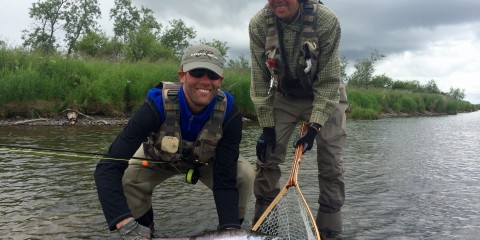
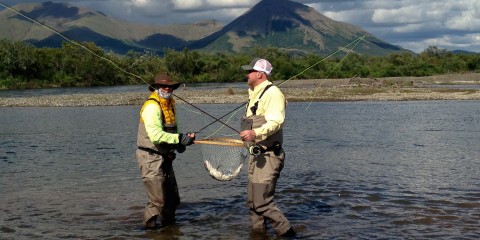
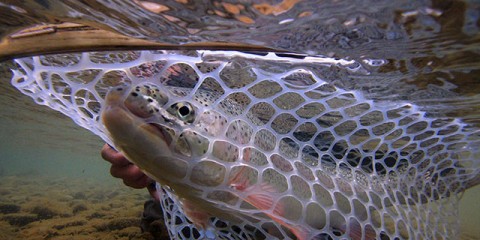
Paul Mackin (young @59 yrs.) picked up a fly rod for virtually the first
time this summer on the King Salmon River. He landed quite a few grayling
on his first afternoon (fly out & put in day). On day two Paul carefully
played and landed a trophy class leopard rainbow. He had five more days
to refine his new skills. Paul also landed a trophy size "black Grayling"
Every so often a mid summer Grayling is pigmented nearly pure black for
reasons that I do not understand. What is also interesting is the recent
research on the age of trophy grayling, like what we catch & release,
which finds large individuals may be 20 years old. The oldest fish in
the 2002 research was 30 years.
Charles Manker, besides being a wonderful fly fisherman, furthered the
wilderness camp cuisine by experiments with "no utensil" fish
roasting. Working over campfires with willow skewers Charles roasted fresh
whole Dolly Varden Char between 2-5 lbs, Charles is sticking to his story
that he cooked the perfect fish!
I had the pleasure of accompanying a real cowboy fly-fisherman with an
honest to god huge belt buckle, Stetson, and a cattle operation to keep
him sleepless during calving season. When he wasnt releasing a steady
stream of rainbow trout, grayling, salmon, etc. he taught me the difference
between the yuppie Starbucks drip coffee I had thought was proper coffee
and real cow-camp coffee. If any of you get a chance to hunt or fly fish
with cattleman Dave Garst, do it.
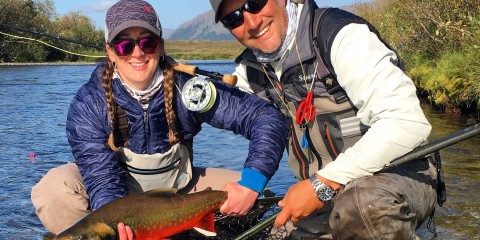
My son & Daughter & I have a soft spot for assisting with "first
salmon events" and "biggest trout of a life moments". Some
guests who really outdid themselves were Steve, Richard, Kate, Jesse,
Paul, Gregory
I am sure I missed a few names. Great moments!
Fishing
summary:
The world class Nushugak river tributaries are the heart & soul of
the area we camp & fish in. This Bristol Bay watershed follows a seasonal
"Bell curve" of rainbow trout abundance. In June before the
salmon arrived we worked harder for resident fish and were content with
2-5 grayling, char/ Dollies, lake trout, rainbows & early Chinook
per hour. Purple egg sucking leeches, black stonefly nymphs, starlight
leeches, smolt patterns, elk caddis & sculpin were the best early
season flies. In July through late August no one went fishless for more
than _ an hour if they fished egg patterns unless they were sleeping,
sightseeing, or eating. The peak of the "Bell Curve" is late
July late August when every guest has to put down their rods and
rest. Anglers in July & August whod caught too many grayling
on egg patterns or salmon switched to Muddlers & other sculpin patterns
fished deep and the ratio of large rainbows caught rose dramatically while
the number of grayling & small char declined.
Wildlife:
We are surrounded by the boreal forest and tundra wildlife of the Bristol
Bay region. Lake Clark, Katmai Monument, & the Alaska Peninsula lie
to the south of us and the Yukon Kuskokwim Delta is north. Flying out
of Dillingham by floatplane puts us in huge (thousands of square miles)
wilderness watersheds. From a wildlife perspective the land we travel
through belongs to the 5 species of pacific salmon massing in the rivers
& creeks, and the coastal brown /grizzly bears, bald eagles, timber
wolves, goshawks, and riverside hermit thrushes & warblers. All were
observed & photographed.
We rafted through migrating bands of the Mulchatna caribou herd. Coastal
brown bear were somewhat more visible in 2002 due to the low water conditions
and consequently more photo opportunities were had. No real problems with
these great animals have occurred in the 25+ seasons Ive spent in
their riverside home. We continue to take great care nonetheless around
these ursine fishermen and always give them the right of way!
Camps:
The river camps & companionship in 2002 were world class. We made
camp night after night on sandbars with salmon porpoising out front. We
are true believers in "leave no trace" camps. On only two nights
out of the season were we in sight or sound of another camp. Generally
we are at least many miles or tens of miles from another human. When we
reached camp I generally fired up the Dutch oven and made hot garlic bread,
pizza, quesadillas or other hot appetizers. While assistants Kate, Alex,
or Jesse, helped guests pitch tents. Dinners favored fresh Chinook or
Sockeye & pasta w/garlic sauce or Thai Char & rice. Cajun dishes,
Mexican, Thai, and Mediterranean dishes influenced our dining this year.
New tents from Mountain Hardwear & NorthFace are rotated into the
gear lineup each year so that all the camping gear is in first-rate shape.
2 guests generally shared large 3 person, 3 season domes with Luxury edition
Thermarest sleeping pads and new, always clean, quallofill sleeping bags
by North Face & Mountain Hardwear. We slept dry & warm & bug
free.
Weather & water conditions:
In 2002 the weather from early June through the 4Th of July was
clear and dry. As July progressed convective afternoon rain showers became
more the norm. Some nasty headwinds pushed against the OBrien party
for a couple of days in the 3d week in July but didnt slow
the fishing. August brought another prolonged dry spell and the inevitable
slide toward autumn. Ripening blueberries by Aug 10 and progressive leaf
color of the aspens, poplars, birch, tundra mosses & shrubs.
Clear rivers:
There were no days with poor water visibility in 2002. We plan trips
with a weather eye and only fish wilderness Rivers with no logging, no
roads, and no mines to deposit silt. Some Bristol Bay rivers pick up a
little turbidity as the gradient settles in the lower reaches where coho
stage. But by all standards the lower reaches of the rivers we fish have
great visibility and we have no problems spotting pods of fish 30 to 40
feet away.
Weather for planning purposes:
June can be, and usually is quite dry and glorious. July tends to be
warm (65-80) with daytime heating causing convective (thunder) showers.
Mid July often marks a seasonal change toward more moisture penetrating
the 50 100 miles distance (that we may be rafting/fishing) from
the coast as the high-pressure systems that dominate early summer break
down. From mid August through mid September wx vacillates between high
pressure warm & sunny to coastal low pressure cool and showery on
about a 4-7 day repeating cycle. Weeklong trips generally get some of
both. This underscores the need for bringing good quality outerwear /
rain gear. Truly the best fishing of the year and perhaps the best of
trophy rainbow of your life may be caught in a rain shower period. That
said we dont push the weather unreasonably. When the weather says,
"stay sheltered" we do that, and fish too.
|