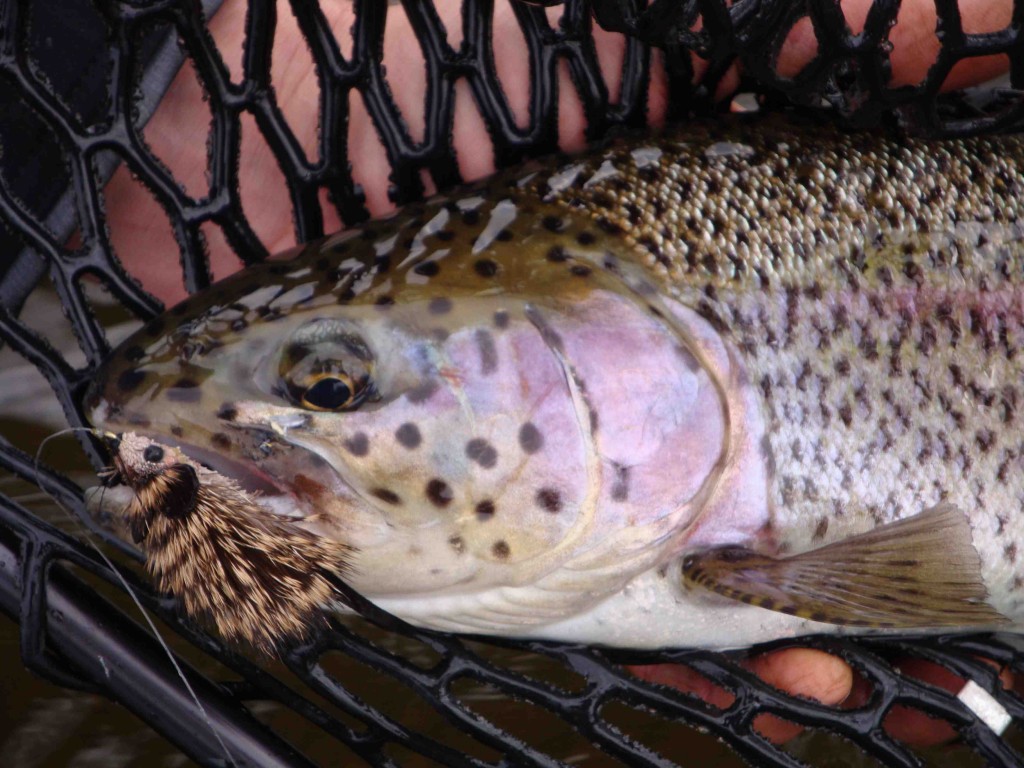
Posted: May 14th, 2012 / Author: Mark Rutherford
August Fly Patterns for Bristol Bay, Alaska
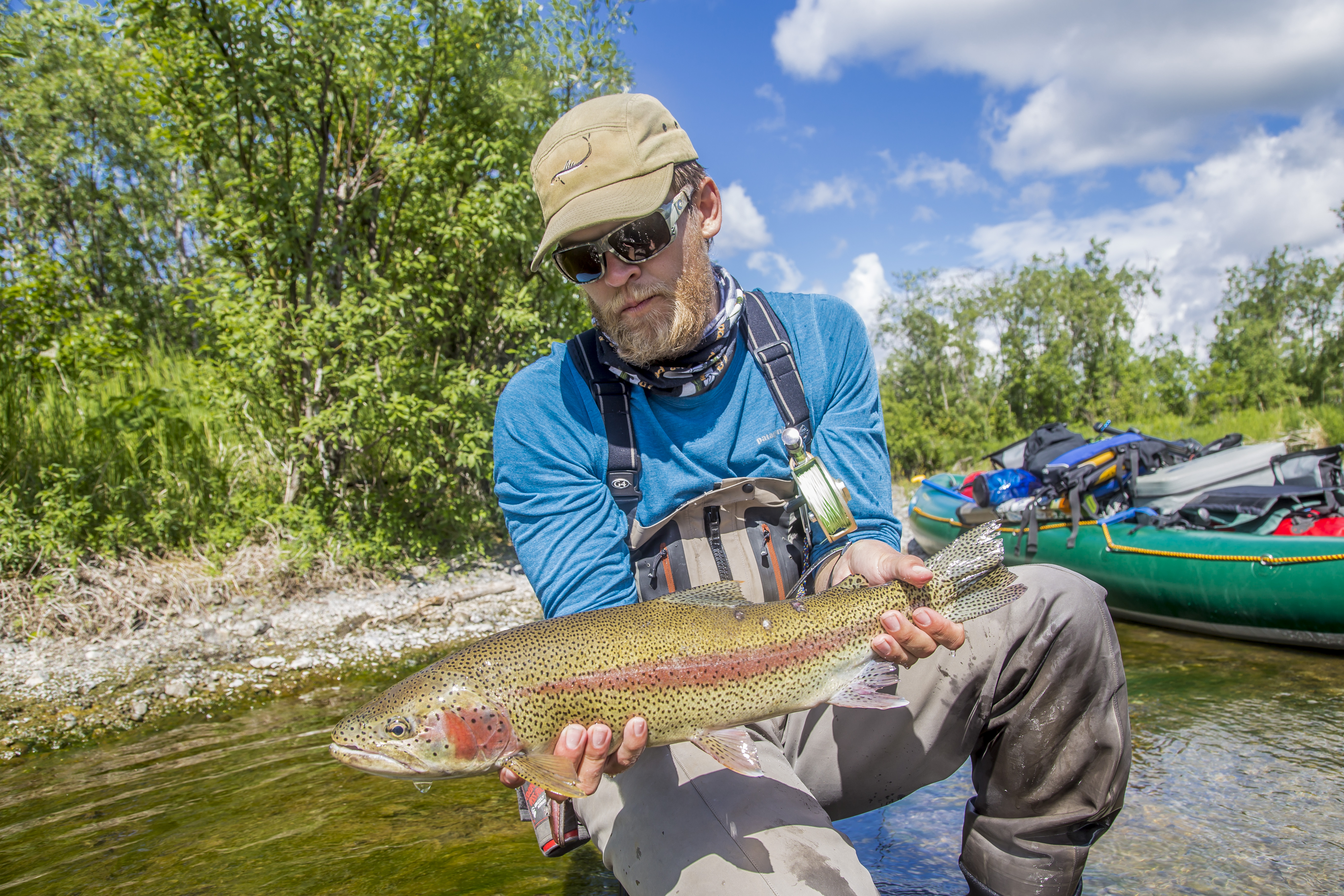
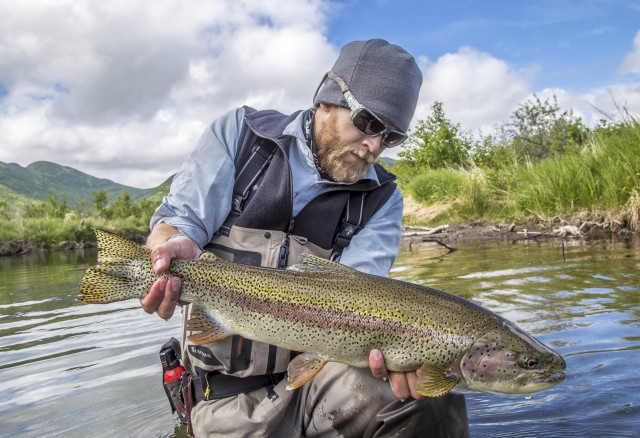
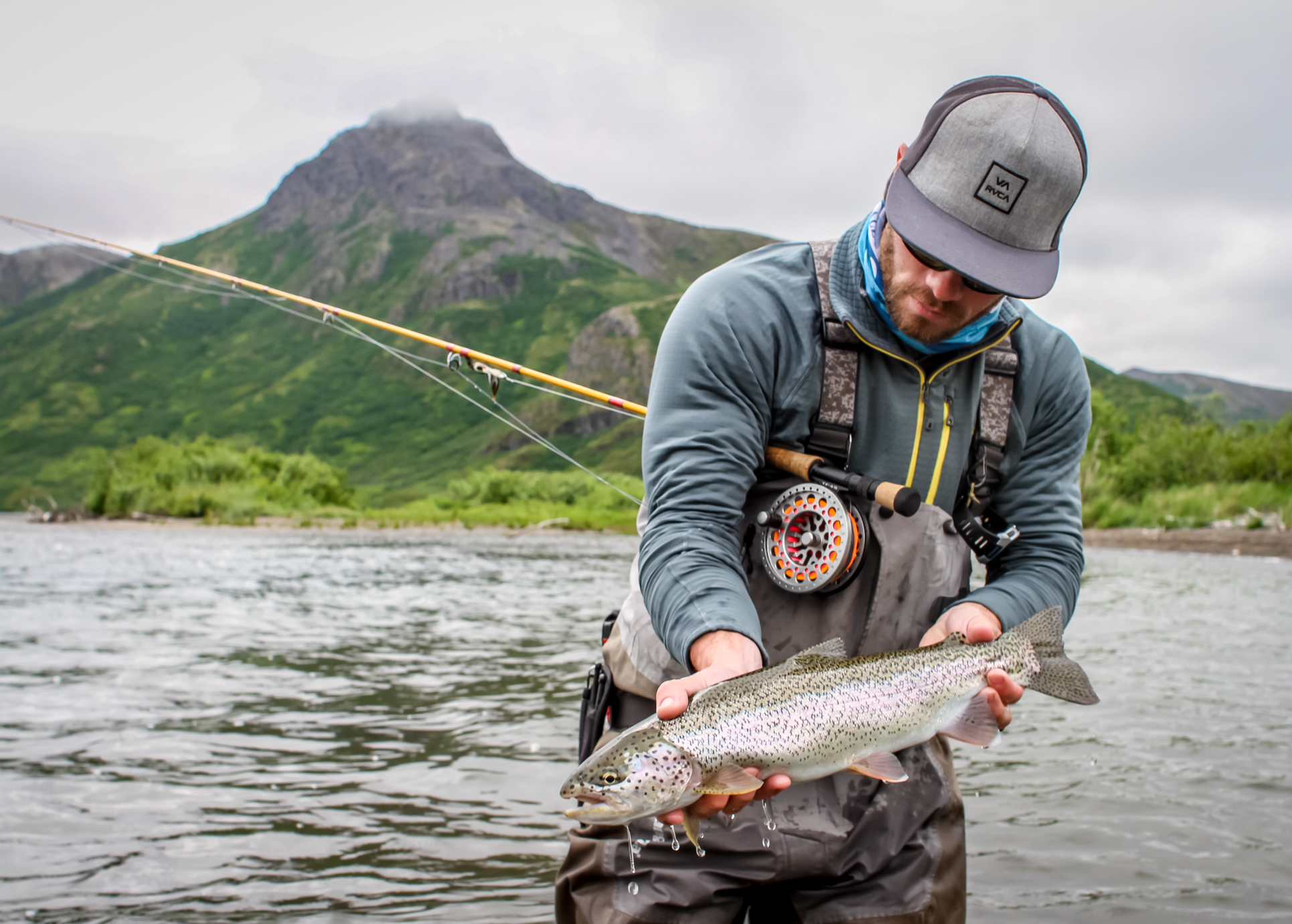
August days hold the potential to catch the largest wild rainbow trout of your life on a mouse pattern in the morning, Char on the flats at mid day, followed by absolute mayhem with Coho in the afternoon. August is defined by the absurdly aggressive Coho / Silver Salmon sharing the river with Leopard Spotted Rainbows and shoals of Dolly Varden Char in their full pre spawn coloration. There can be a brief window in early August where all 5 Salmon are present yielding the Pacific salmon “Grand Slam” for those who keep track of that sort of thing. When the factors of run timing and fair weather align themselves well, then the fishing experience in the Bristol Bay in August is properly regarded as among the greatest experiences of a fly fishers life.
Here is a multi species list of flies for 1 person for 1 week, with an emphasis on resident Rainbow Trout, pre-spawn Dolly Varden Char, Arctic Grayling, a strong focus on Coho / Silver Salmon, plus incidental Salmon, Arctic Char, and Lake Trout. The list was developed for the longer and wilder and more remote rivers of the western Bristol Bay but seems equally well suited to the Katmai / Naknek region and the Alaska Peninsula. I enjoy feedback and I’m curious what works for you.
Skip the Bullshit. Just the fly pattern List:
Trout
Sculpzilla, Big Gulp Sculp Woolhead, Dali Lama, Exasperator, Loop Starlight leech. Haymaker Leech Conehead Eggabou Signature Intruder, Moal Rhoid, Dali Lama, S&B Super string leech
MiceRead the “Mice” section below
Trout beadsRead the “Trout beads. The Salmon spawn begins” section below
FleshMoal Rhoid size #6. Super String Leech in white or flesh size #4. Dolly Llama, white, white/pink size #6. Articulated Lady Flesh in various colors size #4, Twofer, Fleshy Pink, Peachy Orange #6 Battle Creek Special/ Battle Bunny various hues size #6.
Coho
Articulated Hareball Leech size 1/0, purple, black, pink, S&B String Leech pink, fuchsia. Moal, Thunder, Rattlesnake Moal etc size 4 and #2 chartreuse/ white, pink, purple. Kilowatt, size 1/0 black / blue, pink. Clousers, Chartreuse/white in estuary, tutti-frutti, pink, an estuary pattern but pink/white works up river. Egg Sucking Leeches, pink, purple, fuchsia. Extremely simple to tie. All purpose pattern. Jig Spanker S&B String Leech fuchsia Karluk Shrimp, Tequila Sunrise Jig Spanker, 1/0 chartreuse, pink, and purple Dally Lama size 2 or 6. Various colors. Prowler, Critter, Conehead Popsicle, Sleech, Haymaker
WogsPopperwog. A hard bodied surface popper size #2. Fish poppers as a waking fly or “chug” it. This is fun! Kiss of Death Techno-Wog size #4 Techno-Wog size # 1/0 Hammer head Wog size 1/0 Spun Deer Hair Pollywog size 2 Puget Sound Slider
Which fly patterns and how many of each to bring? Looking over field notes from 2011 when I had collaborated with the Bob Roark group to make a fly list for fishing the first week of August. Bob’s group had never fly fished Alaska so they would be building an Alaska fly selection from scratch. After they had discussions about what species to target and where to go with Alaskan anglers, local Colorado fly shops, and an Alaskan shop they settled on 12 patterns which in various sizes, colors and weights amounted to 60 flies per person, not including trout beads. They chose approximately 50/50 ratio of Trout, Char, and Grayling flies with Salmon patterns. At retail shop pricing of $3.50 per fly that would be an outlay of $210 per person. For comparison I opened my large (full jacket pocket size) box of Trout & Char Leeches, Sculpin, and Mice and counted 50 flies. I’m comfortable setting out for a week with my 50. Thirty Trout & Char flies is minimalist but “Aha” you have buddies with you so it might even out, plus quite a few of the salmon patterns are great attractors for trout and char.
As anglers we are participating in an explosion in fly pattern creativity as fly tiers experiment with different materials and fly profiles. Simply stocking the fly box with mice for Rainbow and the surface flies for Coho can be a challenge. Plus a separate “Bead Kit” is vital in August to match the hatch of spawning Kings, Chums, Sockeye, and Pink Salmon. Other fly box(s) will be devoted to Leeches both for Coho and Rainbow. With so many options it’s unreasonable and unnecessary to try to carry all the patterns available. Pick two to four patterns in each “family” of flies with varying amount of weight and differing profiles and articulation. Then fish them carefully and deep. Leaders for an August mixed species day should be in the 10# class.
Trout, Dolly Varden Char, and Grayling
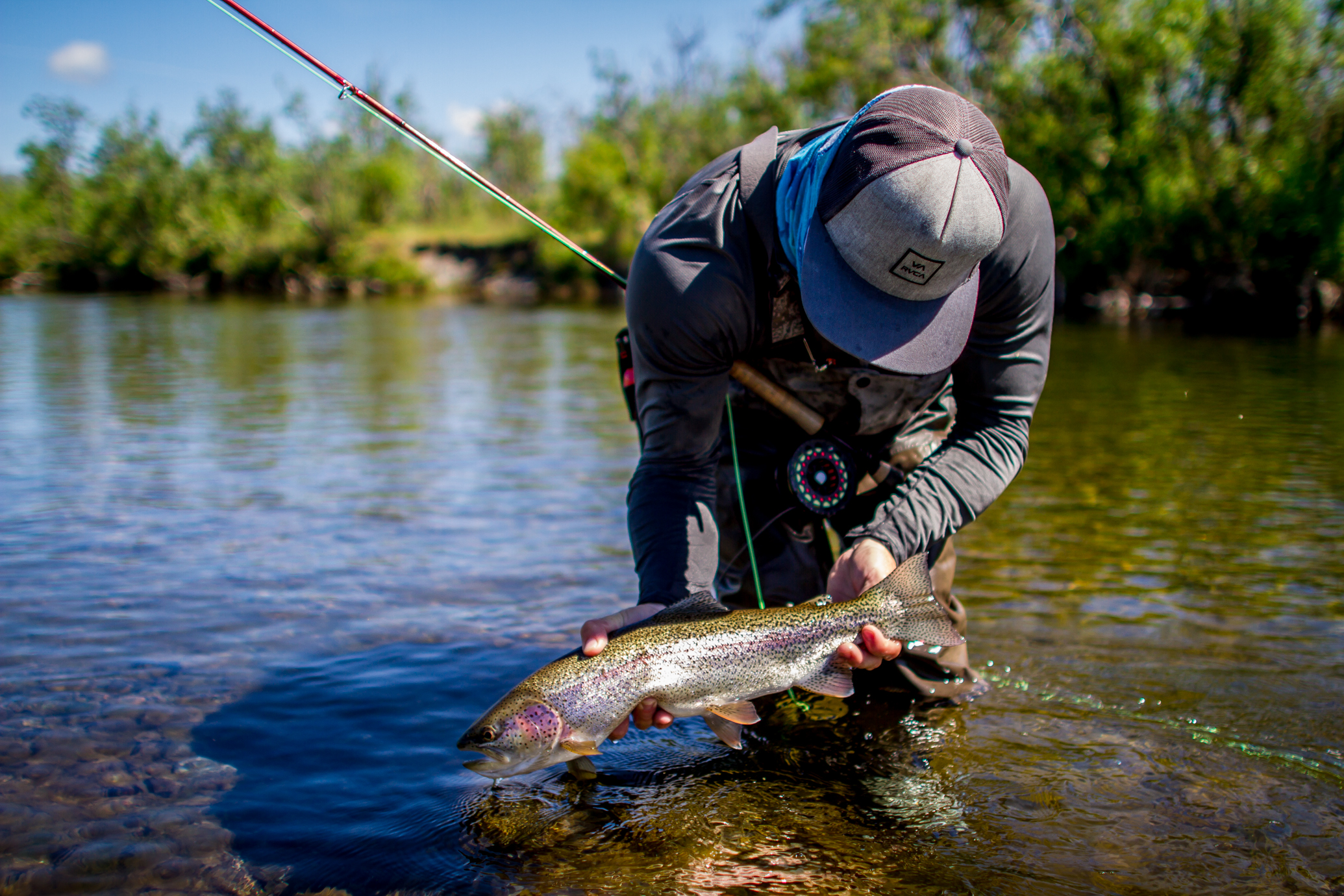
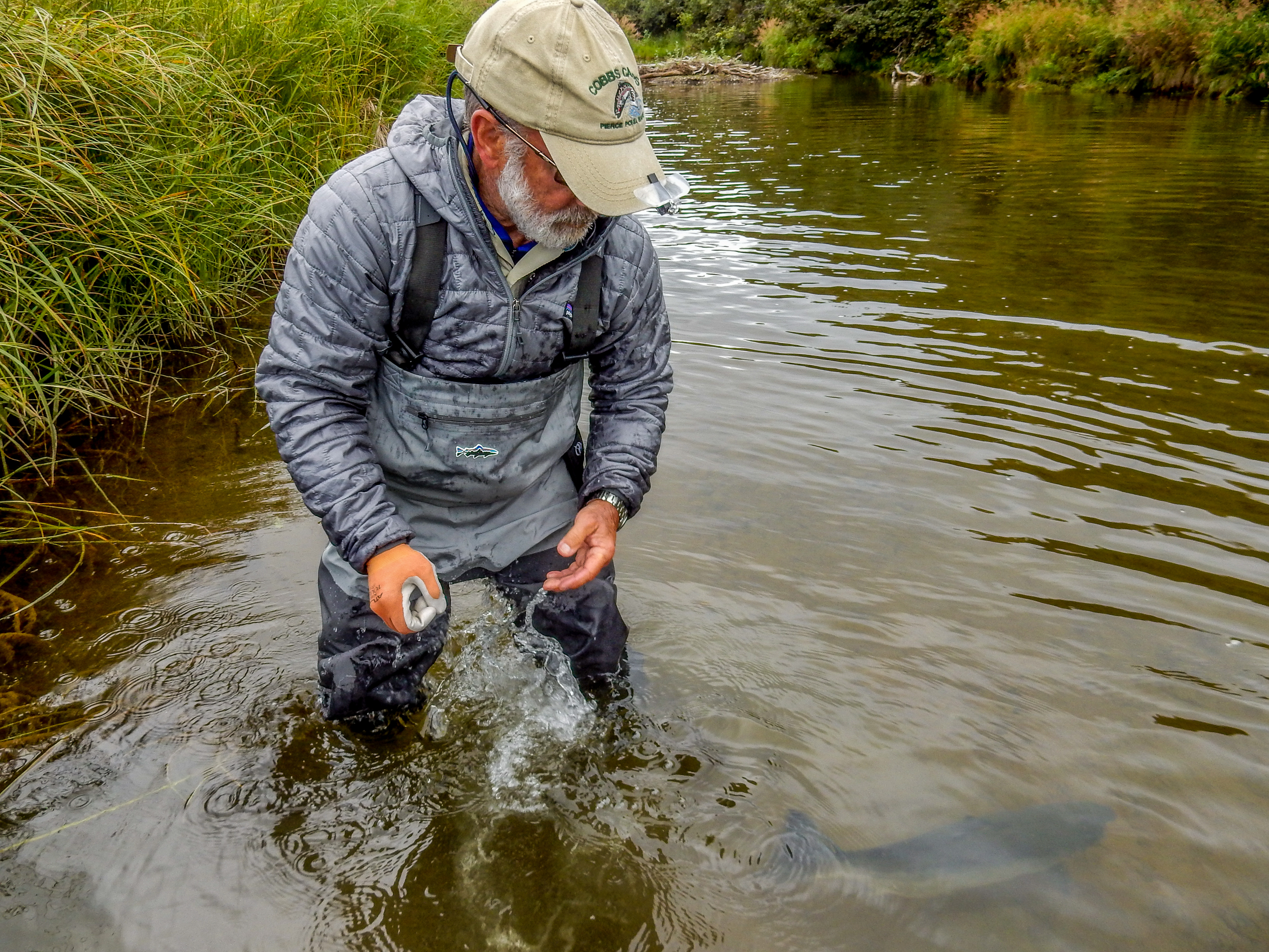
The Bristol Bay is the finest completely intact, functional, wild salmonid fishery in the world! The flies listed are proven for the Bristol Bay region but of course they are not the only patterns that work. When possible, tie or buy your patterns articulated or with stinger hooks for a significantly higher ratio of total fish landed (with less apparent damage to fish mouthparts than traditional streamer hooks.) In the Bristol Bay region, please release all Rainbow Trout regardless of whether the Alaska Department of Fish and Game allows retention. It takes 7-10 years in cold Alaskan waters for a trophy trout to grow beyond 22 inches. King Salmon, if present in the river will be spawning or post spawn. Don’t target Kings or remove them from the water for photos. Fresh Coho Salmon, Lake Trout, Dolly Varden, Arctic Char, and Grayling are options for your fine dining with less impact to the resource.
The Challenge is to Select 30 Trout, Char, & Grayling Flies!
Sculpin patterns and leech patterns are important throughout the summer but August brings a change. In August you’ll fish Sculpin, leeches, and attractor patterns when searching for resident species between active salmon spawning redds. Fished at the redds, Sculpin and leeches are much less successful than egg patterns/ beads so you’ll switch flies or switch rods. In addition they create a significant unintended “by-catch” of territorial or spawning salmon. For searching between spawning redds choose among various Sculpin & Leech patterns keeping in mind some overlap exists with leeches: Choose colors- olive, black, purple, brown, white and include some with contrasting white, red, green or purple accents. Size # 4-6-8. Note that as hook size increases from #8-6-#2 that there is more damage to the trout and char with the larger hook sizes. The size #2 can cause considerable damage to an 18-24 inch trout or char and it is more suited to salmon.
August brings another huge change! There is a dependable source of flesh in the river. True enough that there was some flesh in the river in July, especially in big Chum years. But nothing like the tonnage of biomass that thousands of carcasses, perhaps tens of thousands of salmon carcasses present in August.
SculpinThe Sculpin I observe in the western Bristol Bay region range in color from golden/tan to olive. They are present from headwaters to near the estuary. Rainbow Trout are taken on Sculpin patterns essentially every day of the sport-fishing season. It is a pattern that will take some trout and char in the vicinity of salmon redds. However salmon on redds view the Sculpin (and other large flies) as potential egg predators and give chase, attacking the Sculpin too. The only time I endorse fishing Sculpin, leeches, and big attractor patterns around active spawning redds is when you have good to excellent sight fishing conditions, can selectively target individual trout, and can “retract” the fly from the water if a salmon shows interest. The point being that we are not trying to cause the spawning salmon to work harder than they already have to. When fishing feels like “harassing wildlife” it’s time to move on or to put away the attractors and fish beads, which the salmon essentially ignore. When we foul hook a salmon we break it off.
Sculpzilla, Big Gulp Sculp Woolhead, Dali Lama, Exasperator, Loop
Leech patterns. There are outstanding leeches available commercially and infinite variations if you tie. Choose among: Loop, Articulated Bunny, Sleech, Lead Eye, S&B Super string, Intruder, Starlight, etc. Colors: solid purple, olive, black plus some with contrasting color. Sizes #4-6-8. Bring 6+. Starlight leech. White appeals to Char and Rainbows as flesh. Consider various colors including purple, olive, and chartreuse egg sucking styles. The Starlight leech is easy to tie, relatively inexpensive to buy and a great all purpose Alaska pattern. Haymaker Leech size #1 black or blue. Consider them. Conehead Eggabou size #4. Signature Intruder, Moal Rhoid, Dali Lama, Black & White, size #6 S&B Super string leech, color pink, consider a selection of S&B Super string leeches.
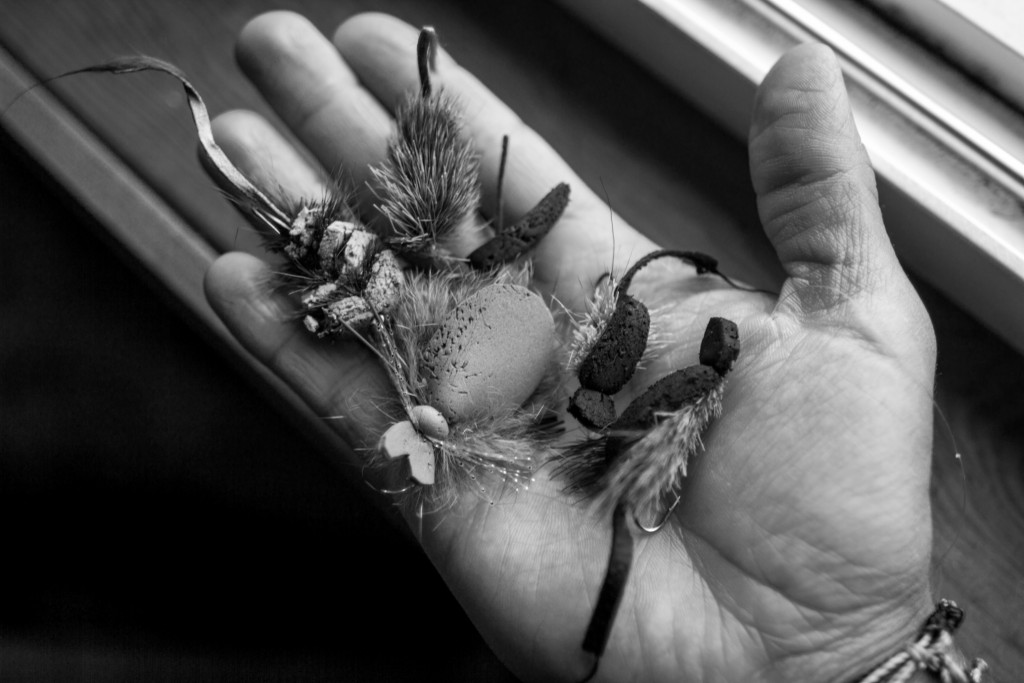
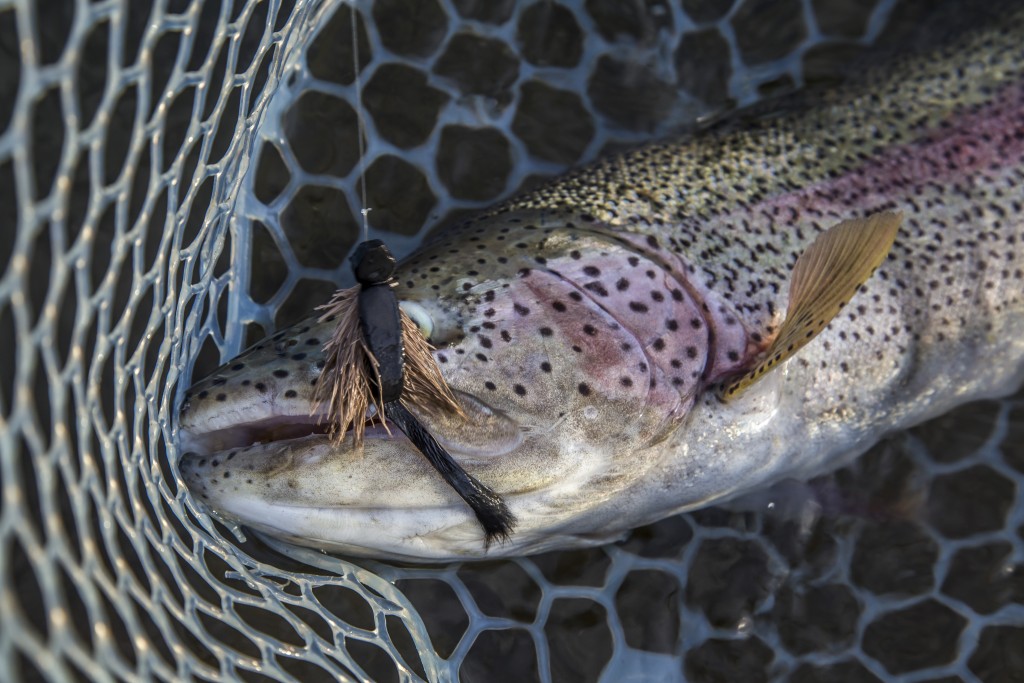
Mice, Choose among Spun Deer Hair, and the newer foam based patterns Mr. Hanky, Loco, Preparation H Mouse, Moorish Mouse, Blair, Darth Skater, and similar. Traditional mice were spun deer hair and they still get lots of use. Bring 1 small bottle silicone floatant (not dry silica) for deer hair Mice and Caddis. How many mice to bring? If this is your first trip mousing bring a selection of 3 patterns. 6 Mice should suffice. If you’ve fished Alaska and know that mousing is what you dream of and what brings you back to the Bristol Bay then you’ll understand that the reward of mousing is not in the numbers of fish caught which will surely be many fewer than fishing streamers and beads, but rather in the drama, humor, and tension of the endeavor. Mousing requires great focus and very good casting skills. At the end of a day, or even a couple hours throwing mice one’s arm has been worked.
Wooly bugger patternsWooly buggers can do it all. Tied in natural colors Olive, Black, Brown, white, and salmon flesh colors size #4-6 they’ll reliably take Grayling, Char, and Rainbow Trout. Tied in Pink, purple, chartreuse with added lead wrapped weight etc they take Coho just fine. There is lot’s to be admired in the simplicity and economy of buggers. Plus they are versatile, fishing well under an indicator with a split shot or fished with a sink tip. Having glanced in my fly box I notice the same 4 buggers have been in there without getting any use since last July. I guess I’d prioritise buggers if I was tying for economy and to have “backup” flies at a reasonable price.
Trout beads. The Salmon spawn begins. Bring a “Kit” such as “Bristol Bay Early Season” Or “Bristol Bay Late Season”. A large kit can be subdivided and shared by 2 or 3 anglers. Who download what they need into their own-compartmented boxes. Bring a kit purchased for the precise species of salmon spawning in your week for your rivers, of the specific Alaskan region you’ll visit. Read or consult as to which size beads to use and how to correctly “peg” them. There is a great deal more finesse involved fishing beads than one might think. After many years and some memorable trophy Rainbows I still learn new bead techniques from creative anglers every season. Consider sliding a single bead up the leader ahead of your Sculpin!
Glo bugs. Truthfully they no longer belong in your Alaska kit. Beads are much more effective with a fraction of the mortality caused by Glo bugs. Trout all too often inhale Glo Bugs and similar roe deep in the throat before becoming hooked. Then they die. There is, no doubt, a more polite way to say this.
Flesh Patterns. The phenomena of Rainbow Trout growing into proportions described as “footballs” in Alaska is closely linked with the amount of spawn and flesh is in the river. August is “about flesh”. Leech patterns tied with bunny strips in white, ginger, tan, and salmon pink are incredibly effective. If there is any fly in Alaska that should be “dead drifted” it is flesh. Still trout and char do “chase it” on the retrieve between casts and on the swing. I would be remiss if I did not mention that where legal to fish a 2 fly rig, that anglers do tie a pegged bead as a trailer behind a weighted flesh fly. This list, with the exception of the “Battle Creek and Twofer” pattern, favors articulated or string tied patterns to minimize damage to the mouthparts of trout and char. The Battle Creek and Twofer are included for fly tiers as examples of flesh patterns for those unable to tie articulated patterns. Choose among:
Moal Rhoid size #6. Super String Leech in white or flesh size #4. Dolly Llama, white, white/pink size #6. Articulated Lady Flesh in various colors size #4, Twofer, Fleshy Pink, Peachy Orange #6 Battle Creek Special/ Battle Bunny various hues size #6.
Fry. Smolt patterns are not nearly as important as they were in June when those baby salmon (true smolt) were out-migrating each evening and holding in deeper water by day. However in August large numbers of fingerling salmon, trout, and Grayling fry do rear in the logjams and sloughs feeding on “drift”. In August and September I’ve seen boils in root wads reminiscent of snook in mangroves as rainbows charged through wads of fry. Choose the Stinger Clouser, Strung out Thunder Creek. They can be fished as dropper, streamer, or dead drifted under an indicator! Green & gold. If I had to leave out some patterns to make room for others I’d leave them out making room for flesh.
Nymphs, As with fry if I had to leave some traditional trout & grayling patterns at home in August it would be nymphs in favor of leeches, flesh, eggs, and Coho attractors. Years go by when my nymph box doesn’t come out in August unless I’m desperate for Grayling and then I’m going to use wooly buggers or eggs. If you are obsessive about bringing all the patterns that might work, but probably won’t be needed, then nymphs can join fry in zip locks in your duffle/
Dries, Royal Wulff, Parachute Adams, Elk Hair Caddis, PMD Parachute, X-Caddis, and Stimulator sizes 12-14. Time spent catching headwater Grayling on dry flies is quality time! Bring a mixed dozen high floating, high visibility dries. Colors tan, brown, black, olive. As with nymphs in Alaska you may never even take these out of your gear duffle. Okay disregard the last paragraph and fish a nymph as a dropper in the headwaters under the dry if it’s legal. Trophy Grayling are worth it!
Coho / Silver Salmon flies
My presumption is that Coho salmon are going to be targeted as well as Rainbow, Grayling, & pre-spawn Dolly Varden Char. In North America there is nothing in the world of cold water fly fishing that compares to the level of action that a mixed day of trout, char, grayling, and Coho fishing produces when the Coho are fresh from the salt and eager for both dry flies and streamers. Certainly no other period of the Alaska calendar leaves the anglers adrenal glands so depleted as these weeks of August when casting mice, pollywogs, beads, and leeches are all so productive.
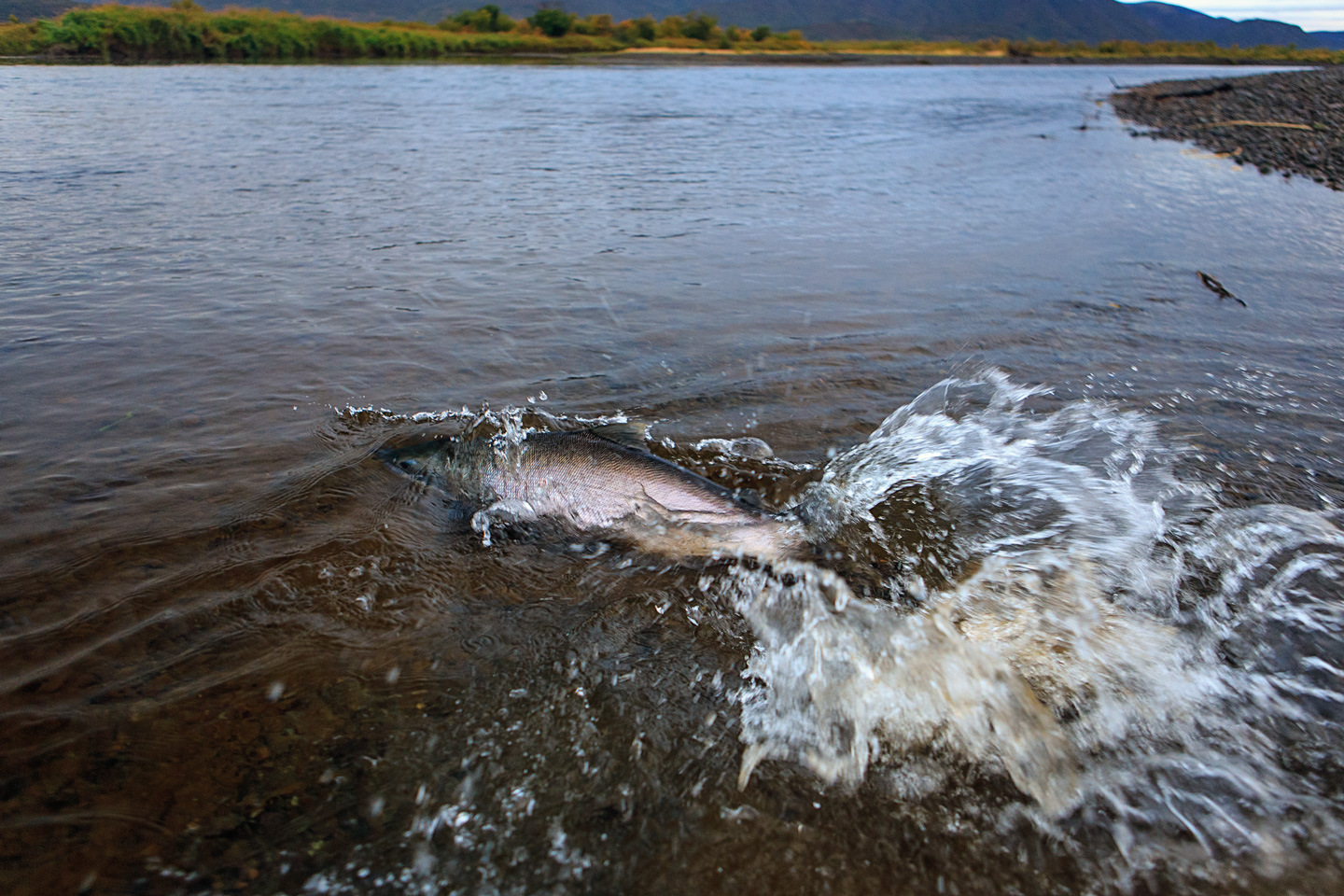
In most Bristol Bay river systems Coho / silver salmon began entering the lower river in late July and by the second week of August are in sizeable numbers beginning to occupy holding water up into the middle reaches of the rivers. Some individuals or small pods will race 30-40 miles up to the spawning grounds in early August. The King, Chum and Sockeye spawn is in full swing in early August but will be completed by late August so a fisherman’s time and timing is of the essence. A big storm blowing in off the Bering Sea in mid to late August will wipe out the weakened Chum, King, Sockeye, and Pink Salmon spawners and turn them into biomass, carcasses, and flesh leaving only Coho who will spawn in September. The rivers feel empty when the summer run salmon are no longer thrashing on the redds.
For Coho / Silver Salmon, the articulated “Bunny”, “Hareball”, “Intruder”, “Stinger Prawn”, “String”, “Critter”, and “Turbo” style leeches are replacing traditional (non articulated) leeches and streamers, due in part to their increased hooking and holding power plus overall attractiveness. Bring various Pink, Orange, Chartreuse, Purple, Black and contrasting combinations in size #2- 2/0.
If Coho are a focus, select a palette of colors and patterns while matching the sink rates of your sink tip line with the style/profile of the fly. Leaders for August Coho should be in the 10-16# class. A #7 weight single-handed rod is an excellent choice for a single rod which can do it all from Rainbow to Silvers. A good case can be made for bringing a 5 wt with a floating line for rainbow and char in the upper river and as a “Bead Rig” in the mid river and a 7 weight with a sink tip for leeches in the upper river and all the Coho patterns in the lower river. When a Coho is incidentally taken on a #5-6 weight rod, if you’ll be patient, and use lot’s of side pressure (angled from across current or downstream), you’ll get the fish to hand before it becomes depleted and anaerobic. Once the quarry shifts mainly to Coho put away the lighter 4-6 weight rods and bring out the 7-9 weight rods before you turn your lovely trout stick into graphite (or bamboo) splinters.
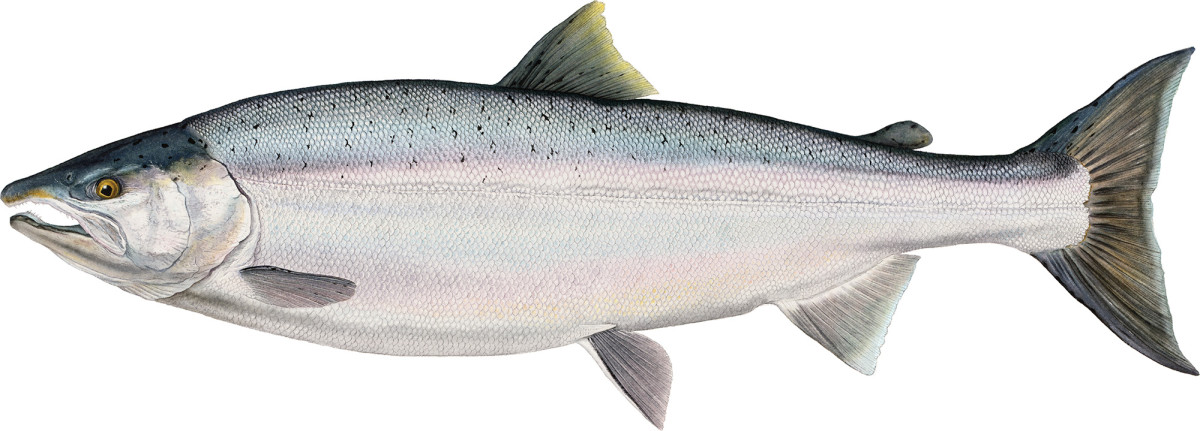
Catch and carefully release all Alaska’s salmon even when they are so seemingly abundant as to be pestiferous! Coho Salmon are a treasured Alaskan fishery resource and in spite of what you might hear Coho are never as absolutely abundant as Sockeye, Pink, or Chum Salmon. In their oceanic element Coho are a predator of herring and various schooling fish and being thus high on the trophic pyramid do not exist in numbers comparable to the macro plankton feeders mentioned above After accounting for the incidental catch of the high seas commercial trawl fleet and Bristol Bay Sockeye gill net fishery each Coho that returns to spawn is precious. Enjoy their savage power, keep one for dinner and release the rest respectfully to spawn.
30 Coho / Silver Salmon flies:
August 1st give or take a week, marks the arrival of Coho / Silvers in the lower portions of Bristol Bay rivers. In the tidally influenced estuary they are going to hammer chartreuse and white Clousers. In the soft holding water upstream of the tidal zone throw Clousers, Articulated Leeches, Flash Flies, Sparkle Shrimp, and perhaps if the constellations are aligned, then in the early morning they’ll hammer floating Pollywog patterns or similar dries.
There is some overlap between Rainbow, Dolly Varden Char, and Coho Salmon patterns and it requires pre trip fly allocation. If Coho fishing will be heaviest toward the second half of your fishing trip you’ll want to manage your selection of large, colorful, weighted Conehead, lead eye, or barbell style leeches so that you have an ample reserve for the Silvers down river. For planning purposes the most concentrated Silver Salmon action will occur in the final 20 miles of a given river system through the third week of August. There will indeed be large numbers of Salmon farther up river but the really large pods of Coho will hold in the lower third of the river until a big autumn storm sends them up. Some years the major storms commence in mid August, other years not until September. In any event save some flies for the lower river.
As with the variety of Rainbow trout leech patterns there are getting to be so many outstanding flies available for Silvers that narrowing down the selection is a challenge. I’d Choose 4-6 Coho fly patterns in various colors, sizes, and weights. You’ll generally fish them with your sink tip. Quite often you’ll be sight casting and able to adjust the sink rate. Include the colors, purple, pink, chartreuse, orange and black.
Articulated Hareball Leech size 1/0, purple, black, pink, S&B String Leech pink, fuchsia. Moal, Thunder, Rattlesnake Moal etc size 4 and #2 chartreuse/ white, pink, purple. Kilowatt, size 1/0 black / blue, pink. Clousers, Chartreuse/white in estuary, tutti-frutti, pink, an estuary pattern but pink/white works up river. Egg Sucking Leeches, pink, purple, fuchsia. Extremely simple to tie. All purpose pattern. Jig Spanker S&B String Leech fuchsia Karluk Shrimp, Tequila Sunrise Jig Spanker, 1/0 chartreuse, pink, and purple
Dally Lama size 2 or 6. Various colors.
Prowler, Critter, Conehead Popsicle, Sleech, Haymaker. So many choices!
Coho Salmon “Dry” Flies:
Dries for Coho began as classic spun deer hair “Pink Polly Wogs” and have evolved into several “Wog” variations made from different materials. In the 1990’s as I sat in the chair of my dentist in Fairbanks he debriefed on the fishing he’d had recently He was middle aged and still a decade from retirement, full of vigor and enthusiasm. He loved multi week float trips and Kodiak Steelhead. As he looked me in the eye with his magnifying exam glasses, and my mouth gripped in his hands he confessed that “Mark at my age catching silvers on Pink Polly Wogs is way better than sex.” I choked on my laughter but his assistant merely politely coughed.
The color pink still dominates the psyche of top-water silvers but either chartreuse or purple is a close second/third. Traditional spun deer hair, popper style, and foam bodied “Wogs” are all excellent. The hard bodied Popperwog arguably cast better than the spun deer hair. They certainly cast better than soaking wet, fish slimed spun deer hair and are much more durable. Bring floatant for deer hair Wogs. I’d recommend bringing “Wogs” of 2-3 various styles in pink, chartreuse, and purple.
Popperwog. A hard bodied surface popper size #2. Fish poppers as a waking fly or “chug” it. This is fun! Kiss of Death Techno-Wog size #4 Techno-Wog size # 1/0 Hammer head Wog size 1/0 Spun Deer Hair Pollywog size 2 Puget Sound Slider size 2. I haven’t tried them but I will in 2012.
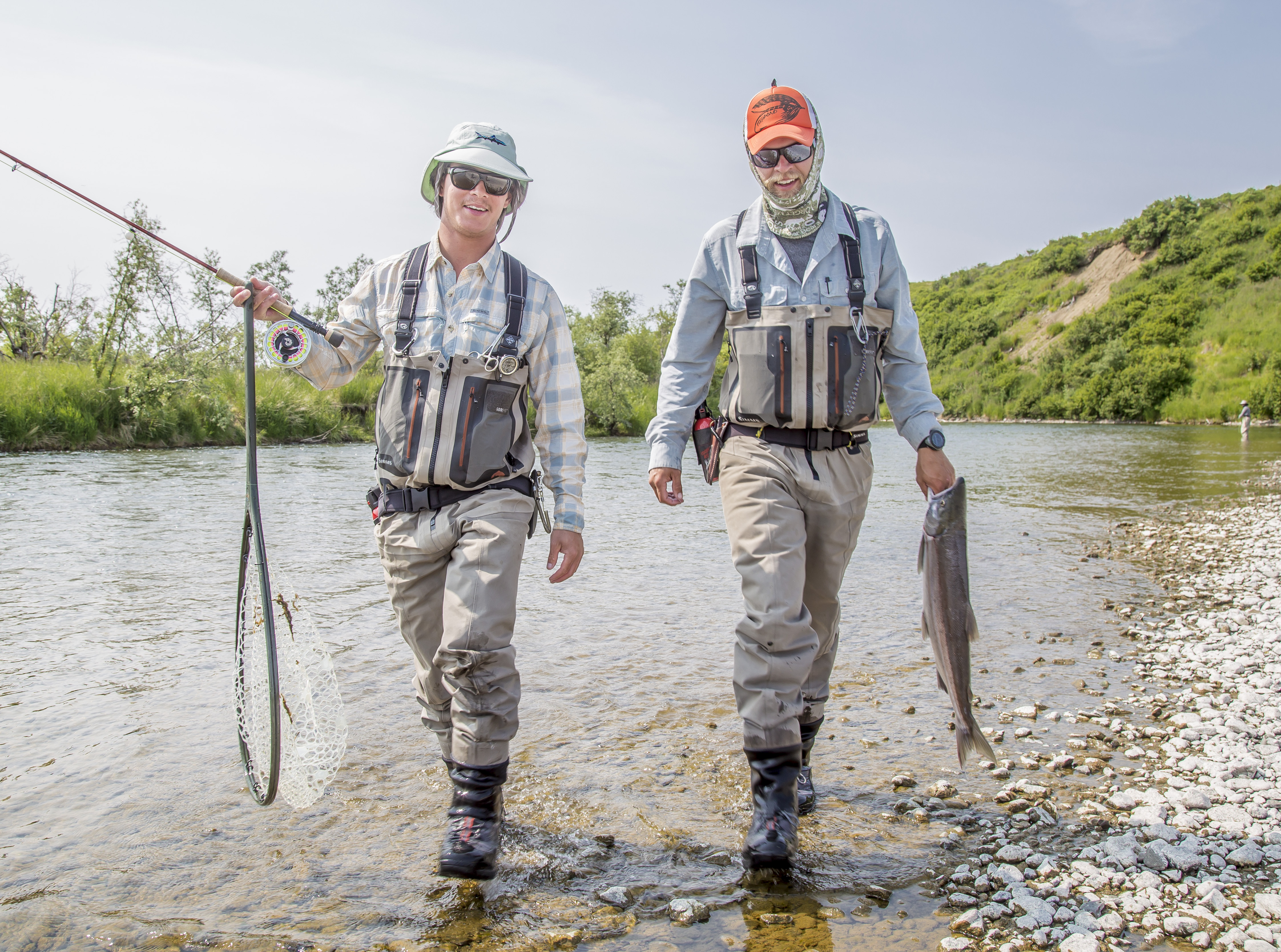
Something to consider is that Coho destroy more graphite fly rods per trip than any other species. They are quite powerful. They can occasionally be caught in rapid succession causing mental impingement and accompanying poor rod handling judgment. Obviously bring a back up rod. Coho also tear up your hands. Use pliers to unhook Silvers or you’ll be lacerated after a dozen fish and need to duct tape your fingers. Wear gloves. The Nitrile gardening gloves by Atlas available at your home & garden center are best. 2+ pairs per week in August.
Pink Salmon Flies
There can be fresh Pinks in the rivers in August and I love chrome Pink Salmon caught in the estuary. I will say that generally one catches all the Pinks one needs as incidental or accidentals. However flies brought specifically for the Pink Salmon aka “Humpy” are most effective in the color pink.
Total Salmon flies 30.
August Technique
Your fly lines chosen for August will determine how heavily weighted your flies should be. Cover your bases by bringing both a floating line and a sink tip, or a multi tip system. A full-sink line might be needed for Coho if you are specifically targeting them in the lower river and tidally influenced estuary of the regions largest rivers such as the Kanektok, Goodnews, or Togiak. Ask experts who know your chosen river what lines / spools to bring.
In August we generally experience rising water levels. Assume for planning purposes that the garden-variety Bristol Bay rainstorms of August have commenced. Use floating lines in the headwaters and for “searching” as you work down river until water depths in the channels, along the outside bends regularly exceed 3 feet and then, perhaps, switch to the sink tip. As you move down river you’ll be pitching flies using the floating line with a weighted fly and perhaps an indicator. You target root wad structure, deep green channels, and sweepers until you find salmon spawning beds. When the quarry is Rainbow Trout one loses a lot of flies in the woody debris, but, until you find spawning concentrations of King, Chum, and Sockeye, structure /and cover is where the Rainbow are. The Dolly Varden Char are more likely to be spread out over large “flats” or long gradually sloping reaches of pea gravel to golf ball sized cobble not associated with structure. You are going to sight fish for Char by watching for the chrome flash given off as a char feeds subsurface. When you see what looks like a pocket mirror flash you have found char.
I prefer aggressive weight forward “chuck & duck” fly lines like RIO Clouser which help turn over weighted flies and indicators for close range casting. You may like a more traditional salmon steelhead taper for longer presentations. Whatever line you choose to launch heavier, bulkier flies; I recommend that you employ a very strong “up-haul / single haul” generating lots of line speed and a more or less open loop to get the whole affair airborne. Once you’ve got plenty of line speed coming off the water all kinds of casts are possible and the angler with a solid double haul is highly efficient.
The 3”or 6” inch per second sink tip is obviously very effective on Bristol Bay Rivers because it carries the fly deeper but also because the mass of the sink tip dampens the oscillations in the line caused by the weighted flies and your casts will be both more accurate and less likely to hit you in the back of the head. If you have enough experience you’ll fish the sink tip both when drifting as well as wading and reap the rewards. If you don’t have enough experience to mend and retrieve the sink tip at the correct rate you’ll lose lots of flies while drifting from a moving boat. In that case rig a second rod with a floating line for drifting in the boat and you’ll do very well. For smaller rivers or headwaters through mid reach I cut the 3-6 ips tips back to nine feet or shorter. For the lower river perhaps a 12’ tip is more effective. My personal lines are 3ips x 9’long for upper river trout and 6ips x 9’long for lower river Coho.
Some misconceptions about indicators in Alaska? Do you fancy yourself an expert streamer or nymph angler? Perhaps feeling a bit of disdain for the guides and clients casting indicator rigs. If so you have a problem to overcome hunting trophy Rainbow. Because if you want to present the leech or sculpin in woody cover which mature Alaska Rainbows favor versus in the riffles and mid river favored by smaller trout, or Dolly Varden Char on broad flats. In August some Rainbow will be in the heavy wood and root wad cover, perhaps adjacent to salmon spawning areas so you want to have control over your fly as it drifts among snags. It is hugely helpful to be able to fish the dead drift and not just swinging the fly down and across. Accomplished Alaskan Rainbow Trout anglers use the indicator to control the fly in the woody debris as well as the depth of the trout bead in the spawning channel. If we have prejudices about that sort of thing we just look beyond them and take note that lots of Alaskans keep one rod rigged in the boat or at camp with an indicator and another rigged for swinging leeches and streamers.
If you are targeting Rainbows in known trout habitat, and not catching any, yet you are catching fair numbers of Grayling or Char, then your fly might be too high in the water column. Grayling will reliably feed all the way to the surface while the rainbows remain deep. Char are in different habitat. Add more weight to get down to the Rainbows.
Mice: When the wind dies by all means throw mice in “woody” portions of the rivers. Mice rarely produce big numbers of fish but they produce more smiles than all the other patterns when they work. Every year some of the largest trout of the year will be taken on mice. If you are having “trouble” hooking too many Dollies, Chum, or Pink Salmon skate a mouse over them to find trout.
The abundance of salmon roe, and salmon flesh plus all the resident feed complicate things in August. You’ll experiment with several patterns per hour until you find “money”. Spawning Salmon is one kind of money! But the spawn is by no means the whole show. It’s easy to imagine that all one has to do is locate a spawning bed(s) and the catching will become “stupid”. Not necessarily so. Spawning has weekly, daily, and hourly cycles like hatches do in the lower ’48. In general the spawning activity picks up hour after hour as the afternoon progresses and water temperature rises a degree or two. Mornings in general are the time to throw flies into structure for Rainbow and to sight fish Dolly Varden Char on the flats, and Grayling in the riffles. Afternoons will be well spent locating a large run with several dozen, to several hundred pairs of spawning Sockeye or Chums.
Beads: When Chum Salmon, Kings, Sockeye, and Pinks are seen paired up in August over cleanly swept gravel it is time to drift beads through the salmon redds or sight cast beads to trout and char visible off to the side. It seems worthwhile to use high quality egg hooks like those manufactured by Owner or Gamagatsu. Some anglers are decidedly unenthusiastic at the prospect of learning the techniques of fishing beads. I would fall into that camp if I hadn’t had so many really pleasurable experiences participating in the grand drama of the salmon spawn. When the salmon spawn is “turned on” bead fishing is hugely enjoyable. It should be noted that beads may be the only offering that consistently works during the spawn and that you’ll need experiment to “match the hatch”. There is lot’s to be said for trout beads. I’ll close out the trout bead discussion noting that we strive to quickly break off foul hooked salmon rather than fight them to exhaustion.
Your rod choices: A #7 weight fly rod does it all. Some anglers bring two #7 weights and never ‘look back’. A #5 weight or #6 weight make all purpose Trout/Char/Grayling nymph & egg rods but when you start fishing the weighted cone head Sculpin, Leeches, and indicator rigs the #7 weight and 8 weight can not be beat. I personally fish a fast action #6 weight for trout, char, and incidental salmon and then switch to a slower action 9 weight for the Coho of the lower river. Certainly once you are regularly catching salmon you’ll want your heavier rod(s).
Notes on Leaders, Indicators, Hemostat, line nipper, pliers, soft release net, and non-slip loop knot
Leaders: The 9 foot tapered RIO #10 pound tippet “Steelhead & Atlantic Salmon” leader is my favorite all purpose trout, char, grayling, salmon leader. Bring 4 leaders per rod/ per week. For Coho the RIO Steelhead & Atlantic salmon leader, 9 Foot 12# or 16# leader is what you want. Bring a spool of RIO #10 pound and #15 pound “Max”, “Powerflex”, or Maxima tippet for rebuilding leaders. Maxima is the standard against which all other tippet for AK is compared.
There are some other good leaders besides Rio & Maxima including “Big Game Fluorocarbon” leaders but be certain they are built for Salmon or salt-water species. The point is to bring leaders, which are made of stiffer, thicker diameter monofilament to TURN OVER LARGE FLIES IN THE WIND and which have 100% knot strength when tied in a “non-slip loop knot”. Your leader is arguably more important than your fly or rod!
Indicators: Most of us have switched to “Thingamabobber” Indicators 1-inch size for larger flies, ¾ inch size for beads and flesh- bring 3-6 indicators. Yarn style indicators treated with floatant is fine. Twist on indicators don’t work with the big weighted flies. Pinch on putty doesn’t work either. I am not unaware of the weird “aesthetics” of casting Thingamabobbers. They just work so well. I also know tremendously accomplished anglers to use Pollywogs or mice as indicators. Split shot: Size BB, 1 & 4, get the most use. The split shot brand I use is “Dinsmore” You crimp it on with a hemostat or pliers. I think it stays on longer than split shot with “wings”. Line Nipper: On a retractor. Hemostat: on a retractor. Must have. Pliers: on your wading belt. Must have for Coho. Hook hone. I never fish without one. Our hooks are constantly touching the cobble bottom.
Leave the neck lanyard and chest pack at home, in my opinion. Just bring an efficient wading jacket with minimal stuff dangling to get caught in brush.
Soft release net: 24-30 inch handle and 20+ inch wide mouth. Big fish! If you’re with a guide insist they provide a soft release net. The traditional nylon net twine wrecks havoc on gills and scales. Knots: You need 1 knot for all the leech, sculpin, smolt, & streamer fishing in the Bristol Bay. Learn to tie the “non-slip loop knot”. It breaks at 100% and will serve you well for Largemouth bass, Redfish, Tarpon, Taimen or anywhere that losing the fish of a lifetime might make you cry. The Improved Clinch is fine for beads and droppers for trout and char. Use a “Riffle hitch” or “Turle” knot for mousing & “wogging”. Spare flies Organized in zip locks in your small waterproof duffle bag along with anything else that doesn’t live in your jacket pockets. Windproof Lighter in jacket. Deet bug dope. 1 small plastic spray bottle per week per person in wading jacket pocket.
Purchasing flies and tying materials for Bristol Bay Alaska
Over the years I’ve visit most of Alaska’s fly shops and I really believe in supporting retail fly shops. I’ve shopped many of the big lower ‘48 “full spectrum” fly-fishing and fishing travel shops, and some mega-Outdoor stores. Most of the lower ’48 shops don’t have the selection or expertise to get all the flies you need for a Bristol Bay trip from a single vendor, but by all means get what you can from your local shop. The best all around shop that I’ve found for flies and Alaska tying materials is an on-line shop located in Juneau, Alaska called “Alaska Fly fishing Goods” http://www.alaskaflyfishinggoods.com. They are extremely good at what they do. Brad Elfers is the owner. (907) 586-1550 It’s really informative to tell him or his staff the weeks(s) you’ll be fishing and on what rivers and then ask for recommendations!
To produce this Fly selection list for Bristol Bay I relied heavily on my 35 years of experience in Alaska exploring with a fly rod and from thousands of riverbank discussions with other guides and Alaskan residents. You should know for planning purposes that June is early spring. July is summer. August is autumn. September is late autumn.
You should strive to organize in one jacket pocket all the large leeches and salmon flies needed for the day. In the other large pocket one small kit / box for Eggs, and perhaps a zip lock with mice and “Wogs”.
Remember; don’t leave home without these 5 items in your carry on luggage.
-
Your best Polaroid glasses.
-
Your Rx medications.
-
Your favorite waterproof/breathable wading or fully waterproof rain jacket with retractors for hemostat and line nipper and 2 large pockets for fly boxes.
-
Waders you completely trust.
-
Wading boots that fit. Felt soles were outlawed in AK in 2012. No “studded” boots in rafts or cabins.
For more information go to www.wildriverfish.com And http://www.alaskaflyfishinggoods.com
Posted: April 3rd, 2012 / Author: Mark Rutherford
July Fly Patterns for Bristol Bay, Alaska.
It is so much more complex to stock your Alaska fly box for July than for June or August! A great deal more total feed is available to resident fish in July than in June including fry of salmon, trout, char, and Grayling. There are Caddis, stone, & mayfly nymphs, plus salmon spawn and a bit of flesh late in July. While I have not seen stickleback in July, occasionally small Lamprey are present and Sculpin are pounced upon with enthusiasm. In July forage diversity is at the seasonal apex.
In mid July, adult sea run Dolly Varden Char begin to return to the rivers. In the last week of July a weather transition can begin bringing autumn storms. Finally you need Coho / Silver fly patterns in late July. All 5 Salmon can be present after Coho arrive yielding the Pacific salmon “Grand Slam”.
Flies for 1 person for 1 week.
Here is a multi species list, with an emphasis on resident Rainbow Trout, Dolly Varden, Arctic Grayling, King and Sockeye Salmon plus patterns for Chum and Pink Salmon, early Coho / Silvers, Arctic Char, Lake Trout, and Northern Pike.
As anglers we are participating in an explosion in fly pattern creativity as fly tiers experiment with different materials and profiles. Simply stocking the July fly box with Leeches is a challenge. But with such a huge variety to choose from it’s unreasonable and unnecessary to try to carry them all. Pick two or three leech patterns with varying amount of weight and differing profiles and articulation. Then fish them carefully and deep. The same is true for Sculpin patterns.
Trout, Char, and Grayling.
The Bristol Bay is the finest completely intact, functional, wild salmonids fishery in the world. The flies listed are proven for the Bristol Bay region but of course they are not the only patterns that work. When possible, tie or buy your patterns articulated or with stinger hooks for a significantly higher ratio of total fish landed (with less damage to fish mouthparts than traditional streamer hooks.) In the Bristol Bay region, please release all Rainbow Trout regardless of whether the Alaska Department of Fish and Game allows retention. It takes 7-10 years in cold Alaskan waters for a trophy trout to grow beyond 22 inches. Fresh Sockeye, Lake Trout, Dolly Varden, Arctic Char, and Grayling might be kept to provide your fine dining.
48+ Trout Flies
Sculpin patterns. Choose among various Sculpin patterns keeping in mind some overlap exists with leeches: Sculpzilla, Cone head, Rag, Woolhead, Dali Lama, Exasperator, Loop, etc. Choose colors- olive and black and include some with contrasting red, green or purple accents. Size # 4-6-8. Bring 6+ total of two or three proven patterns.
Leech patterns. There are outstanding leeches available commercially and infinite variations if you tie. Choose among: Loop, Articulated Bunny, Sleech, Lead Eye, S&B Super string, Intruder, Starlight, etc. Colors: solid purple, olive, black plus some with contrasting colors. Sizes #4-6-8. Bring 6+.
Starlight leech. Color white for Lake Trout and Char and as flesh late in July. Consider them.
Haymaker Leech size #1 black or blue. Consider them.
Conehead Eggabou size #4. Bring 2.
Signature Intruder, Moal Rhoid, or Al Green size #8. Bring 4.
Dali Lama, Black & White, #6 Bring 2.
S&B Super string leech, consider a selection of S&B Super string leeches. Bring 2+.
Mice, Choose among Mr. Hanky, Loco, Preparation H Mouse, Moorish Mouse, Blair, Darth Skater. Bring 1 small bottle silicone floatant (not dry silica) for Mice and Caddis. Bring 4.
Wooly bugger patterns in Olive, Black, Brown, size #4-6 bring 4.
Trout beads. The Salmon spawn begins. 8mm for Chum, natural roe, glow, egg yolk, orange clear. Mottled beads in gold, mango, peachy etc with egg hooks. Bring a kit purchased for the precise species of salmon spawning in your week for your rivers, of the specific Alaskan region you’ll visit. Consider sliding beads up the leader ahead of your Sculpin!
Glo bugs. Truthfully they no longer belong in your Alaska kit. Beads are much more effective with a fraction of the mortality caused by Glo bugs. Trout all too often inhale Glo Bugs and similar roe deep in the throat before becoming hooked. Then they die.
Fry. Smolt patterns are not as important as in June when those baby salmon (true smolt) were out-migrating each evening and holding in deeper water by day. However you will see increasing numbers of salmon, trout, and Grayling fry that rear in the log jams and sloughs feeding on “drift” as the weeks pass. Our tendency is to cast leeches & sculpin into the woody debris and overlook fry patterns, but there are days when if you are not dead drifting a fry pattern you are simply not catching fish! Fry need to be part of your July searching process. Choose the Stinger Clouser, Strung out Thunder Creek, Neil Creek Dart, Neil Creek Slider. They can be fished as dropper, streamer, or dead drifted under an indicator! Green & gold. Bring 4+.
Nymphs, Size 12-16 Copper Johns, Bead Head Pheasant Tail, etc. Bring a mixed one half dozen. Fished as dropper behind a leech (where legal) while searching for fish or under an indicator. You probably won’t get lots of use of your nymphs. However if you are fishing the few “known” rivers with dependable aquatic insect hatches like the Copper or Agulukpak bring 3 dozen nymphs. Years go by when my nymph box doesn’t come out in July unless it’s cold and I’m desperate for Grayling.
Dries, Royal Wulff, Parachute Adams, Elk Hair Caddis, PMD Parachute, X-Caddis, Stimulator sizes 12-14. Bring a mixed one half dozen in a box shared with nymphs unless you are fishing the few “known” rivers with highly dependable hatches like the Copper or Agulukpak then bring 3 dozen dries. High floating, high visibility. Colors tan, brown, black, olive. As with nymphs in Alaska you may never even take these out of your gear duffle.
Total flies 48.
Salmon flies
My presumption is that King and Sockeye salmon are going to be targeted as well as Rainbow, Grayling, & Char. This list “Over Weights” flies for Kings because in North America there is nothing that even comes close to the power and strength of a King except perhaps a sturgeon. Certainly no fish porpoises across a small cold wilderness river like a Chinook.
In most river systems salmon began entering the lower river in late June and by mid July are in enough numbers and beginning to occupy holding water in the middle reaches of the rivers. The first Chum Salmon pair up on spawning beds in mid July while the Kings will mainly be in deep runs & holding water. By mid July, with Sockeye “bunched up” in pods in the mid river, or staged at creek mouths and lake outlets, those “Reds” are definitely worth trying to get to eat a fly.
For King or Chinook Salmon, the articulated “Hareball”, “Intruder”, “Stinger Prawn”, “String”, “Critter”, and “Turbo” style leeches are replacing traditional (non articulated) leeches, due in part to their increased hooking and holding power plus overall attractiveness. Bring various Pink, Orange, Chartreuse, Purple, Black and contrasting combinations in size #2- 2/0.
Unlike relatively scarce but more aggressive King Salmon, the super abundant, extremely acrobatic Sockeye or Red Salmon can be tough to entice to take leeches or streamers. You may see hundreds of sea bright Sockeye migrating along shore but they can be frustratingly lock-jawed, when they are moving or migrating. You’ll need a selection of very sparsely tied traditional wet flies specifically for Sockeye. Since fresh Sockeye sets a very high standard for a shore lunch or riverside dinner you’ll want to factor that in!
If Kings are a primary Salmon focus, select a palette of colors and patterns while matching the sink rates of your sink tip line with the style/profile of the fly. Leaders for Kings should be in the 12-20# class. A #7 weight single-handed rod is “okay” for Sockeye & incidental small Kings but for a steady diet of Chinook consider a single handed #8-9 weight or step it up to a switch or spey rod. When a King is incidentally taken on a #5-6-7 weight rod, if you’ll be patient for the first 5-10 minutes, and then use all the side pressure you can wield (angled from across current or downstream), you’ll get the fish to hand before it becomes depleted and anaerobic.
Catch and carefully release Kings! King or Chinook Salmon are a treasured Alaskan fishery resource like leopard spotted Rainbow Trout. If you are going to kill a salmon that has entered a Bristol Bay river, choose a Sockeye, a smaller 7-10 lb. King, or especially a “jack” King. Release the larger mature King unharmed to spawn. In spite of what you might hear Kings are never abundant like Sockeye, Pink, or Chum Salmon. After accounting for the incidental catch of the high seas commercial trawl fleet and Bristol Bay Sockeye gill net fishery each King that returns to spawn is precious. Enjoy their savage power and release them to spawn.
24 King Salmon flies:
Articulated Hareball size 1/0-2/0, purple, black, pink, orange bring 6.
Intruder in combinations of Black, pink, purple, orange size 1 - 2/0, bring 6.
Fish these or similar King patterns on the swing when searching holding water for fish. Kings like a slow, slow, slow presentation. However if you are sight fishing to a pod, dead drift the fly directly to the mouth of the target fish. Repeat presentations will jade them while sight fishing, so your best chance is the first or second cast. Consider red/black combinations if Kings are finicky or have been in fresh water awhile.
Spey flies, Tube flies, Prowler, Kilowatt, Critter, Conehead Popsicle, Sleech, Moal, Haymaker all have the attracting qualities needed for Kings. Substitute among patterns size 1- 2/0 for the style(s) you enjoy fishing at depths of 4-10 feet. Bing 12.
12 Sockeye Flies:
Copper Swan #6 red, chartreuse, silver. Bring 4.
Sockeye Orange or Sockeye Special #4, #6 in orange and black Bring 2.
Montana Brassie #4 also effective on Dollies & Rainbow Bring 2.
Sockeye Lightning #6 in pink and green. Bring 4.
Red hot #6 consider it.
Bring a dozen Sockeye flies with red, chartreuse, orange, green, silver and pink among the colors. Dead drift these with an indicator set at the exact depth that you see fish holding or migrating. The take is very subtle. Sockeye are macro-plankton (krill &shrimp) feeders at sea and don’t have the alpha strike/chase response of Kings, Coho, or Chum.
When Sockeye are grouped in pods in holding water, as opposed to migrating past, it is worth casting size #6 articulated leeches ahead of the front fish in the pod. See if you can’t get an alpha fish to peel off and be aggressive.
Once hooked, it can get wild but If they seem “lock-jawed” keep changing patterns and add split shot to get the presentation correct. If flossing or snagging begins to seem like the only option, then move on and find a fresh pod.
4 Chum Salmon Flies:
Popperwog. Chartreuse surface popper #2. Cut back your leader into the butt section toward #15-20 test. Fish poppers as a waking fly or “chug” it. Bring 2+. This is fun!
Hareball leeches Chartreuse #1/0. Bring 2.
Chums will hammer most large salmon attractor patterns and especially the color green so you don’t necessarily have to bring special patterns other than the Popperwog. Chums destroy a disproportionate number of graphite fly rods. They are brutes. They also tear up your hands. Use pliers to unhook them or you’ll be lacerated after a couple fish and need to duct tape your fingers.
Pink Salmon Flies
Pink Salmon in the lower river or estuary, where they are chrome, can be fantastic sport and will aggressively take Chartreuse, purple, and pink leeches and popper Wogs. Your selection of trout and salmon leech patterns might already contain some pink. If not close that color gap because one must also have the color pink for June, July, and August trout, char, and salmon!
8 Coho / Silver Salmon Flies:
July 25, give or take a few days, mark the arrival of the vanguard of Coho / Silvers in the lower portions of Bristol Bay rivers. In the tidally influenced estuary they are going to hammer chartreuse and white Clousers. In the soft holding water upstream of the tidal zone throw articulated Bunny Leeches, Flash Flies, Sparkle Shrimp, and perhaps if the constellations are aligned, then first thing in the morning they’ll hammer floating Wog patterns.
There is considerable overlap between Rainbow, King, and Coho Salmon patterns. Coho will be toward the end of your trip and so in reality you’ll throw whatever you have left.
Coho Leech patterns. As with Rainbow leech patterns there are so many outstanding leeches available commercially for Coho / Silvers and infinite variations if you tie. Choose 2-3 patterns in various colors, sizes, and weights. You’ll generally fish them deep with your sink tip. You’ll want the colors, purple, pink, chartreuse, orange and black. Choose among:
Loop & other leeches, Articulated Bunny, Sleech, Conehead Eggabou, size #2-4. Bring 2+.
Clouser, chartreuse and white size #2. Bring at least 1.
Flash fly, red hackle. Bring 2.
Prawn patterns colors orange and pink. Bring 2+.
Wogs color pink. Bring 1+.
Total Salmon flies 48.
Northern Pike
8 Northern Pike Flies if large lakes with shallow bays are part of the plan:
Barry’s Pike Fly White & Red size #2 bring 2.
Mercers Lemming or spun deer hair mouse bring. 2 Other surface flies, Dancing Frog consider it. When Pike want surface flies, you won’t want to fish subsurface.
Moal size #2 in combinations of Black, red, white, yellow, orange. You’ll use them for trout and salmon as well. Bring 4.
July Technique.
Your fly lines will determine to some extent how heavily weighted your flies should be. Cover your bases by bringing both a floating line and a sink tip. A full-sink line will be needed for Kings and possibly Coho if you are specifically targeting them in the lower river and tidally influenced estuary. Ask experts who know your chosen river what lines / spools to bring.
In July we generally experience the lowest river water levels of the summer. The spring / June runoff is complete and the storms of August have (hopefully) not commenced. Use your floating line in the headwaters and for “searching” as you work down river until water depths in the channels, along the outside bends regularly exceed 3 feet and then, perhaps, switch to the sink tip. As you move down river you’ll be pitching flies using the floating line with a weighted fly and perhaps an indicator. You are targeting root wad structure, deep green channels, and sweepers. When the quarry is Rainbow Trout one loses a lot of flies using this method, but, until mid July when the very earliest Chum and Sockeye spawn, structure /and cover is where the Rainbow are.
I prefer aggressive weight forward “chuck & duck” fly lines like RIO Clouser which help turn over weighted flies and indicators. Whatever line you choose to launch the heavier, bulkier flies; I recommend that you employ a strong haul generating lots of line speed and a more or less open loop. The 3”- 6” i.p.s. sink tip is very effective on Bristol Bay Rivers not just because it carries the fly deeper but because the mass of the tip dampens the oscillations of the cast caused by the weighted flies. If you have enough experience you’ll fish the sink tip both when drifting as well as wading and reap the rewards. If you don’t have enough experience to mend and retrieve the sink tip at the correct rate you’ll lose lots of flies while drifting from a moving boat. In that case rig a second rod with a floating line as an indicator rig for drifting in the boat and you’ll do very well. For smaller rivers I cut the 3-6 ips tips back to nine feet or shorter.
Misconceptions about indicators? Do you fancy yourself an expert streamer angler? Perhaps you feel disdain for the guides and clients casting indicator rigs. Think again if you want to present the leech or Sculpin in woody cover versus in the riffles. In June and July rainbow can be in the heavy wood and root wad cover so you want to have control over your fly as it drifts among snags. It is hugely helpful to be able to fish the dead drift and not just swinging the fly down and across. Accomplished Alaska Rainbow Trout anglers use the indicator to control the fly in the “wood” and from the angling log of the last decade data show that leeches, Sculpin, and fry dead drifted under an indicator out fish other methods.
If you are targeting Rainbows in known trout habitat, and not catching any, yet you are catching fair numbers of Grayling, then your fly is too high in the water column. Grayling will reliably feed all the way to the surface while the rainbows remain deep. Add more weight to get down to the Rainbows.
Mice: When the wind dies by all means throw mice in “woody” portions of the rivers. Mice rarely produce big numbers of fish but they produce more smiles than all the other patterns when they work. Every year some of the largest trout of the year will be taken on mice. If you are having “trouble” hooking too many Dollies, Chum, or Pink Salmon skate a mouse over them to find trout.
As mentioned, the diversity and abundance of natural food availability ramps up in July so you’ll experiment with several patterns per hour until you find “money”. Today it might be fry patterns and nothing else. Tomorrow it might be Sculpin and everything else. Makes it a challenge. From time to time run a size #12, 14, or 16 Copper John, Pheasant tail, or bead head Prince Nymph down through the run.
Beads: When Chum Salmon are seen paired up in mid-late July it is time to drift 8mm beads in colors gold, glo, mottled mango, peachy etc through the redds or sight cast beads to trout and char visible off to the side. It pays to use high quality hooks with beads like “Owner”. Some anglers “turn up their nose” at fishing beads. Still when the salmon spawn is “turned on” beads are not only intoxicating but they can be the only offering that consistently works.
Your rod choices: A #7 weight fly rod does it all. Some anglers bring two #7 weights and never ‘look back’. A #4 is a fine rod for Arctic Grayling and trout under “ideal” (but somewhat rare windless) July conditions. The #5 weight & #6 weight make all purpose Trout/Char/Grayling nymph & egg rods but when you start fishing the weighted cone head Sculpin, Leeches, and indicator rigs the #7 weight can not be beat.
Notes on Leaders, Indicators, Hemostat, line nipper, pliers, soft release net, and non-slip loop knot.
Leaders: The 9 foot tapered RIO #10 pound tippet “Steelhead & Atlantic Salmon” leader is my favorite all purpose trout, char, grayling, incidental salmon leader. Bring 4 leaders per week. For Coho & Kings the RIO Steelhead & Atlantic salmon leader, 9 Foot 12# or 16# leader is what you want. Bring 3 per week for salmon. Bring a spool of RIO #10 pound and #15 pound “Max”, “Powerflex”, or Maxima tippet for rebuilding leaders. Maxima is the standard against which all other tippet for AK is compared.
There are some other good leaders besides Rio & Maxima including “Big Game Fluorocarbon” leaders but be certain they are built for Salmon or salt water species. The point is to bring leaders, which are made of stiffer, thicker diameter monofilament to TURN OVER LARGE FLIES IN THE WIND and which have 100% knot strength when tied in a “non-slip loop knot”. Your leader is arguably more important than your fly or rod!
Indicators: Most of us have switched to “Thingamabobber” Indicators 1-inch size for larger flies, ¾ inch size for beads and smolt- bring 3-6. Yarn style with floatant is fine. Twist on indicators don’t work with the big weighted flies. Pinch on putty doesn’t work either. I am not unaware of the weird “aesthetics” of casting Thingamabobbers. They just work so well.
Split shot: Size BB, 1 & 4, get the most use. The split shot brand I use is “Dinsmore” You crimp it on with a hemostat or pliers. I think it stays on longer than split shot with “wings”.
Line Nipper: On a retractor.
Hemostat: on a retractor.
Pliers: on your wading belt.
Leave lanyard and chest pack at home. Just bring an efficient wading jacket with minimal stuff dangling to get caught in brush.
Soft release net: 24-30 inch handle and 20+ inch wide mouth. Big fish!
Knots: You need 1 knot for all the leech & streamer fishing in the Bristol Bay. Learn to tie the “non-slip loop knot”. It breaks at 100% and will serve you well for Largemouth bass, Redfish, Tarpon, Taimen or anywhere that losing the fish of a lifetime might make you cry. The Improved Clinch is adequate only for beads and droppers for trout. Use a “Riffle hitch” or “Turle” knot for mousing & “wogging”.
Spare flies Organized in zip locks in your duffle bag along with anything else that doesn’t live in your jacket pockets.
Windproof Lighter in jacket.
Deet bug dope. 1 small plastic spray bottle/week per person in Jacket pocket.
Over the years I’ve visit most of Alaska’s fly shops. I’ve shopped many of the big lower ‘48 “full spectrum” fly shops, and some mega-Outdoor stores. Most of them don’t have the selection or expertise to get all the flies you need for a Bristol Bay trip from a single vendor. The best all around shop that I’ve found for flies and Alaska tying materials is an on-line shop located in Juneau, Alaska called “Alaska Fly fishing Goods” http://www.alaskaflyfishinggoods.com. They are extremely good at what they do. Brad Elfers is the owner. (907) 586-1550 It’s really informative to tell him the weeks(s) you’ll be fishing and on what rivers and then ask for recommendations!
To produce this July Fly selection list for Bristol Bay I relied heavily on my 35 years of experience in Alaska exploring with a fly rod and from thousands of riverbank discussions with other guides and Alaskan residents. You should know for planning purposes that June is early spring. July is summer. August is autumn. September is late autumn.
This list assumes that your partner will lend you what you run out of or what you did not bring! You should strive to organize in one jacket pocket all the large leeches and salmon flies needed for the day. In the other large pocket one small kit / box for Eggs, and 1 small box for Smolt, and a few dries.
Remember; don’t leave home without these 5 items in your carry on luggage.
- Your best Polaroid glasses.
- Your Rx medications.
- Your favorite waterproof/breathable wading or fully waterproof rain jacket with retractors for hemostat and line nipper and 2 large pockets for fly boxes.
- Waders you completely trust.
- Wading boots that fit. Felt soles were outlawed in AK in 2012. No “studded” boots in rafts or cabins.
For more information go to www.wildriverfish.com and http://www.alaskaflyfishinggoods.com
Posted: Feb 13th, 2011 / Author: Mark Rutherford
A Fly Selection for the greatest Trout and Salmon fishery in the world, Bristol Bay, Alaska.
Flies for 1 person for 1 week on a float trip or fishing with the region’s best lodges.
This is a multi species list, with an emphasis on June Rainbow Trout and Arctic Grayling, plus all of the other sport-fish in the Bristol Bay watersheds including Arctic Char, Lake Trout, early Kings, Sockeye, and Northern Pike. A short discussion follows.
First, don’t leave home without these 5 items in your carry on luggage.
- Your best Polaroid glasses.
- Your Rx medications.
- Your favorite waterproof/breathable wading or fully waterproof rain jacket with retractors for hemostat and line nipper and 2 large pockets for fly boxes.
- Waders you completely trust which will get the equivalent of a full year of normal use during your AK trip.
- Wading boots that fit. Felt soles were outlawed in AK in 2012. The sticky rubber soles are now quite good. No “cleated, nailed, or studded” boots in rafts or cabins.
Why? In case Alaska Airlines loses you’re checked bags with your clothing, rods, reels, and flies. You came a long way! Improvise and go fish!
Flies Trout, Char, and Grayling.
The Trout, Char, and Grayling flies below are proven in Bristol Bay, which is the finest completely intact, functional salmonid fishery in the world. When possible, tie or buy your patterns articulated or with stinger hooks for a significantly higher ratio of total fish landed (with less damage to fish mouthparts than traditional streamer hooks.) In the Bristol Bay region, please release ALL RAINBOW TROUT regardless of whether the Alaska Department of Fish and Game allows retention. It takes 10-15 years in cold Alaskan waters for a trophy trout to grow beyond 22 inches. Sockeye, Lake Trout, Char, and Grayling in June all provide great eating.
Your fly line(s) will determine to some extent how heavily weighted your flies should be. Cover your bases by bringing both a floating line and a sink tip. A full-sink line is not needed for our rivers and creeks.
Use your floating line in the headwaters and for “searching” as you work down river until water depths in the channels along the outside bends regularly exceed 3 feet and then, perhaps, switch to the sink tip. As you move down river you’ll be pitching flies using the floating line with a weighted fly and perhaps an indicator. You are targeting root wad structure, deep green channels, and sweepers. The quarry is Rainbow Trout. One loses a lot of flies using this method, but, in June, this is where the fish are and you must fish in the woody debris and among broken chunks of sod left from spring flooding! Use fly lines like RIO Clouser which help turn over the large weighted flies with an aggressive weight forward taper. Cast aggressively to launch the leeches with lots of line speed. The 3”- 6” sink tip is very effective on Bristol Bay Rivers. If you have the “gift” you’ll fish the sink tip both when drifting in the boat or wading and reap the rewards. If you don’t have the “gift” you’ll lose lots of flies and leaders fishing the sink tip while drifting from the boat and go back to the floating line and do very well.
Your rod choices: A #7 weight fly rod does it all. Some of my clients or friends bring two #7 wts and never ‘look back’. A #4 is a fine rod for Arctic Grayling and trout under “ideal” (but somewhat rare) June conditions. The #5 weight & #6 weight make all purpose Trout/Char/Grayling rods but when you start fishing the weighted cone head Sculpins & Leeches the #7 weight can not be beat.
48 Trout Flies
- Sculpin patterns. Choose among various Sculpin patterns: Sculpzilla, Cone head, Rag, Woolhead, Exasperator, Loop, etc. Colors- olive, black. Size 2-4. Bring 4+ of your chosen pattern(s), 2 in each color.
- Egg sucking leeches Patterns. Choose among: Loop, Articulated Bunny, Sleech, Lead Eye, or Starlight, purple, olive, white, all purpose attractor. size #4-6. At least 2 should be purple. Bring 4+.
- Starlight leech. All white, good attractor for rainbow. Great color for Lake trout at your “put in lake”. Bring 2.
- Haymaker Leech Conehead Eggabou size #1 black or blue. Consider it.
- Conehead Eggabou size #4 in pink or purple. Bring 2
- Dali Lama, Black & White, #6 all purpose attractor. Bring 2.
- Dali Lama, Green & White, #6. An option to substitute for traditional olive Sculpin.
- S&B Super string leech, or Pink rubber worm Sleech size #4 pink. Cold water Rainbows bring 2. Consider a selection of S&B Super string leech colors. A very fine fly.
- Mice bring 4+, Mr. Hanky, Loco, Preparation H Mouse, Moorish Mouse, Blair, Darth Skater, Mercers Lemming. You should have small bottle silicone floatant (not dry silica) for Mice and Caddis.
- Wooly bugger patterns in Olive, Black, Brown, size #4-6 bring 4.
- Nymphs, Hares ear, Pheasant Tail, Copper John etc. Bring 4. Fished as dropper in upper river or in cold water under an indicator.
- Trout beads, 8mm, natural roe and gold roe colors fished as dropper with “Owner” egg hooks. Bring 6. Fish as dropper where legal.
- Smolt & Fry. Stinger Clouser, Strung out Thunder Creek, Neil Creek Dart, Neil Creek Slider, Bring 4+ can be fished as dropper, streamer, or dead drifted under an indicator! Green & gold.
- Dry flies. For headwater through mid river when Grayling are rising. Elk Hair Caddis, Royal Wulff, Parachute Adams, Stimulator. High floating, high visibility. Size 14. Bring 6.
Total flies 48.
Salmon flies
My presumption is that salmon are going to be targeted opportunistically in June on a mixed species trip. In most river systems salmon are just beginning to enter the river in late June. For salmon, generally, the articulated “Hareball”, “Intruder”, “Stinger Prawn”, “String”, “Critter”, “Turbo” style leeches are replacing traditional (non articulated) leeches, due in part to their increased hooking/holding power plus better overall attractiveness. Bring various Pink, Orange, Chartreuse, Purple, Black and contrasting combinations in size #2- 2/0. Unlike relatively scarce but more aggressive King Salmon, the super abundant, extremely acrobatic Sockeye Salmon can be tough to entice to take leeches or streamers. You may see hundreds of sea bright Sockeye entering the rivers in the last week of June but except for the occasional “alpha” fish they can be frustratingly lock-jawed. You’ll need a selection of very sparsely tied traditional wet flies specifically for Sockeye. Hint: You want to eat Sockeye for dinner!
If Kings are the primary Salmon focus, then select a palette of colors and patterns while matching the sink rates of your sink tip line with the style/profile of the fly. Leaders for Kings should be in the 12-20# class. A #7 weight single handed rod for Sockeye & incidental Kings is okay but for a steady diet of King salmon a #9 weight is better. When a King is incidentally taken on a #5-6-7 weight rod be patient for the first 5-10 minutes and then for the salmon’s sake use all the side pressure you can wield to get the fish to hand before it becomes severely depleted and anaerobic. Kings are a treasured Alaskan fishery resource like Rainbows. If you are going to kill a salmon on a Bristol Bay river, choose a Sockeye or a “jack” King. Release the mature King unharmed to spawn.
12 King Salmon flies:
- Articulated Hareball size 1/0-2/0, purple, black, pink, orange bring 6
- Intruder in combinations of Black, pink, purple, orange size 1 - 2/0, bring 6.
Fish these or similar King patterns on the swing when searching holding water for fish. Kings like a slow, slow, slow presentation. However if you are sight fishing to a pod, dead drift the fly directly to the mouth of the target fish. Repeat presentations will jade them while sight fishing so your best chance is the first or second cast. Consider red/black combinations if Kings are finicky or have been in fresh water awhile.
Spey flies, Tube flies, Prowler, Kilowatt, Critter, Conehead Popsicle, Sleech, Moal, Haymaker all have the attracting qualities needed for Kings. Substitute among patterns size 1- 2/0 for the style(s) you enjoy fishing at depths of 4-10 feet.
12 Sockeye Flies:
- Copper Swan #6 Bring 4. Red, Chartreuse, silver
- Sockeye Orange or Sockeye Special #4, #6 in orange and black Bring 2.
- Montana Brassie #4 also effective on Dollies & Rainbow Bring 2.
- Sockeye Lightning #6 bring 4 in ping and green.
- Red hot #6 consider it.
Bring 12 Sockeye flies with red, chartreuse, orange, green, silver and pink among the colors. Dead drift these with an indicator set at the exact depth that you see fish holding or migrating. The take is very subtle. Sockeye are macro-plankton (shrimp) feeders at sea and don’t have the alpha strike/chase response of Kings, Coho, or Chum. Once hooked, it can get wild! If they seem “lock-jawed” keep changing patterns and add split shot to get the presentation correct. If flossing or snagging begin to seem like an option, then move on and find a fresh pod.
8 Chum Flies:
- Popperwog. Chartreuse surface popper #2. Cut back your leader into the butt section toward #15-20 test. Fish poppers as a waking fly or “chug” it. Bring 2. This is fun!
- Starlight leech bring 4 in various colors including chartreuse/ white size #2-1/0.
- Hareball leeches Chartreuse #1/0. Bring 2.
Chums will hammer most large salmon attractor patterns especially the color green so you don’t have to bring special patterns other than the Popperwog. The Popperwog dry fly is the most fun. Chums destroy a disproportionate number of graphite fly rods. They are brutes. They also tear up your hands. Use pliers to unhook them or you’ll be lacerated after a couple fish and need to duct tape your fingers.
Total Salmon flies 28.
6 Northern Pike Flies:
- Mercers Lemming. When Pike want surface flies, you won’t fish anything else. Bring 2+.
- Moal size #2 in combinations of Black, red, white, yellow, orange. Bring 4.
Total Pike flies 6.
Notes on Leaders, Indicators, Hemostat, line nipper, pliers, soft release net, and non-slip loop knot.
Leaders: The 9 foot tapered RIO #10 pound tippet (or #6 tippet) Steelhead & Atlantic salmon leader is the best all purpose trout, char, grayling, miscellaneous salmon leader. 9 Foot Maxima is just as good. Bring 4 per week.
For Coho & Kings the RIO Steelhead & Atlantic salmon leader, 9 Foot 12# or 16# leader is what you want. Bring 3 per week. Bring a spool of RIO #10 pound and #15 pound “Max”, “Powerflex”, or Maxima tippet for rebuilding leaders.
There are some other good leaders besides Rio & Maxima including various “Big Game Fluorocarbon” but be extremely wary. You want to bring leaders, which are made of stiffer, thicker diameter monofilament to TURN OVER LARGE FLIES IN THE WIND and have 100% knot strength tied when in a “non-slip loop knot”. Your leader is arguably more important than your fly or rod! Use relatively stiff, relatively hard monofilament leaders for Alaska trout for all situations except throwing dry flies. I watch fly casters waste hours and hours each week trying to use supple trout leaders in Alaska throwing weighted leeches. The leader should be labeled “Salmon,” “Steelhead,” “Big Game,” “Bonefish,” or “Bass”. These are fundamentally different than ordinary trout leaders and designed to deliver heavier flies with fewer tangles. Fishing with the correct leader is your key to maximizing the number of fish caught in Alaska.
Indicators: Most of us have switched to “Thingamabobber” Indicators 1-inch size for larger flies, ¾ inch size for beads and smolt- bring 6. Yarn style with floatant is fine too.
Split shot: Size BB, 1 & 4, get the most use. The split shot brand I use is “Dinsmore” You crimp it on with a hemostat or pliers. I think it stays on longer than split shot with “wings”.
Line Nipper: On a retractor.
Hemostat: on a retractor.
Pliers: on your wading belt.
Leave lanyard and chest pack at home. Just bring an efficient wading jacket with minimal stuff dangling to get caught in brush.
Soft release net: 24-30 inch handle and 20+ inch wide mouth. Big fish!
Knots: You need 1 knot for all the leech & streamer fishing in the Bristol Bay. Learn to tie the “non-slip loop knot”. It breaks at 100% and will serve you well for Largemouth bass, Redfish, Tarpon, Taimen or anywhere that losing the fish of a lifetime might make you cry. The Improved clinch is adequate only for beads and droppers for trout. Use a “Riffle hitch” or “Turle” knot for mousing & “wogging”.
Spare flies Organized in zip locks in your duffle bag along with anything else that doesn’t live in your jacket pockets.
Windproof Lighter in jacket.
Deet bug dope. 1 small plastic spray bottle/week per person in Jacket pocket.
Over the years I’ve visit most of Alaska’s fly shops. I’ve shopped many of the big lower ‘48 “full spectrum” fly shops, and some mega-Outdoor stores. Most of them don’t have the selection or expertise to get all the flies you need for a Bristol Bay trip from a single vendor. The best all around shop that I’ve found for flies and Alaska tying materials is an on-line shop located in Juneau, Alaska called “Alaska Fly fishing Goods” http://www.alaskaflyfishinggoods.com. They are extremely good at what they do. Brad Elfers is the owner. (907) 586-1550 It’s really informative to tell him the weeks(s) you’ll be fishing and on what waters and then ask for recommendations!
To produce this June Fly selection list for Bristol Bay I relied heavily on my 35 years of experience in Alaska exploring with a fly rod and from thousands of riverbank discussions with other guides and Alaskan residents. You should know for planning purposes that June is still early spring. Fishing in June is not so much about Salmon but rather the resident species like Rainbows and Grayling, which are hungry after spawning. Aquatic insects, Snails, Smolt, Sculpin, Lamprey, Stickleback, and Fry are their mainstay.
This list assumes that your partner will lend you what you run out of or what you did not bring! You should be able to organize these in one large fly box for all the large leeches and salmon flies needed for the day plus one other smaller box for Eggs, Smolt, and a few dries in your other jacket pocket. June is a too early for the salmon spawn so I won’t address dead drifting beads through active redds, but, if your trip extends far into July, you will want a separate box of beads purchased as a kit specifically for the weeks and salmon species spawning.
This list also assumes you will be fishing with recommended Salmon / Steelhead leaders in #6-10 class for Trout, Dolly Varden Char, Grayling, Arctic Char, leaders in #10 class for Lake Trout, Chum, and Sockeye. King Salmon and Northern Pike require #16-#20 although a true minimalist can do it all on 10# tippet. Heavier leaders for trout helps us minimize the number of flies left on the river bottom/overhanging trees and to minimize stress to the fish. The trout are rarely leader shy in remote waters (particularly prior to the salmon spawn) and the salmon are not leader shy.
For more information go to www.wildriverfish.com
|